How Deep Does A Try Dive Go On Crete?
A per-trip answer to try dive depth on Crete: which operators publish 8 m, 9 to 10 m or 12 m, which trips stay silent, how children's depths differ, and how a recognition card differs from a certification.
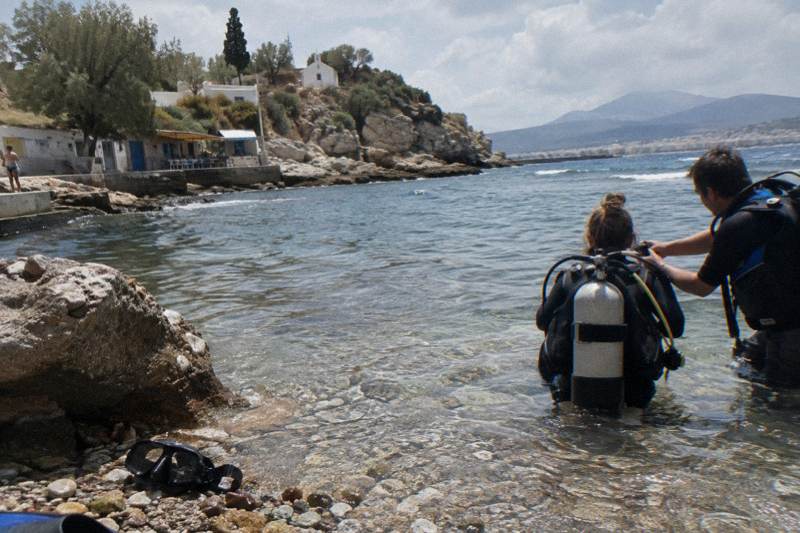
Only a few operators publish an exact figure: Omega Divers takes beginners up to 8 m, Chania Diving Center to a maximum of 9 to 10 m, and the Salty Descents SSI Basic Diver trip to 12 m across two shore dives. Most other try dives give no depth number at all, so your actual depth depends on the operator you book with.
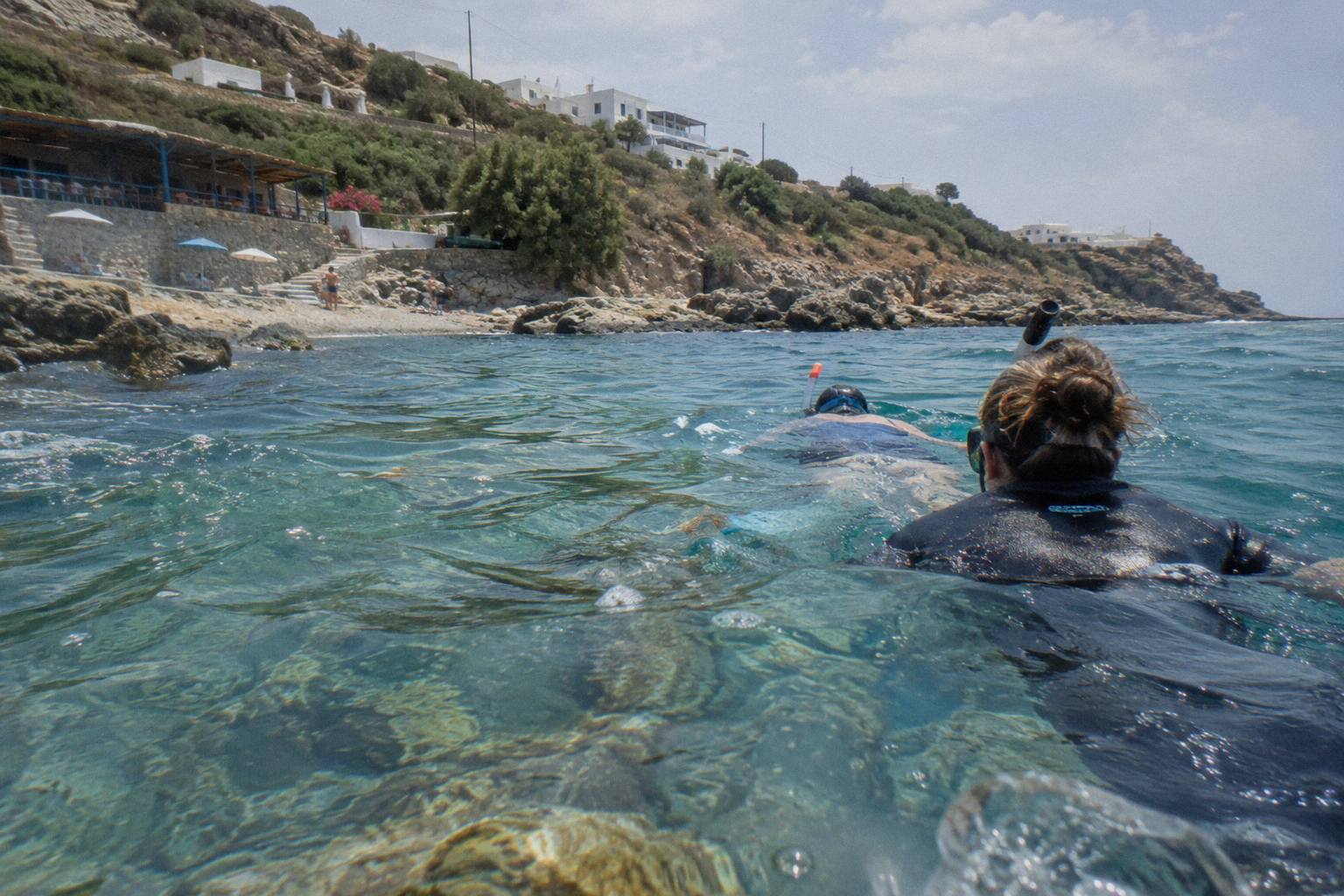
That answer feels thinner than a single number would, but a single number would be wrong. Divers writing about try dives in general will tell you a first dive is shallow, and that is broadly the shape of it, yet depth is set by the operator running the day, not by the island. Crete has no island-wide rule that a beginner stops at 6 m or 8 m. Each dive centre designs its own session, staffs it to its own ratio, and either publishes a maximum or leaves it to the briefing on the day.
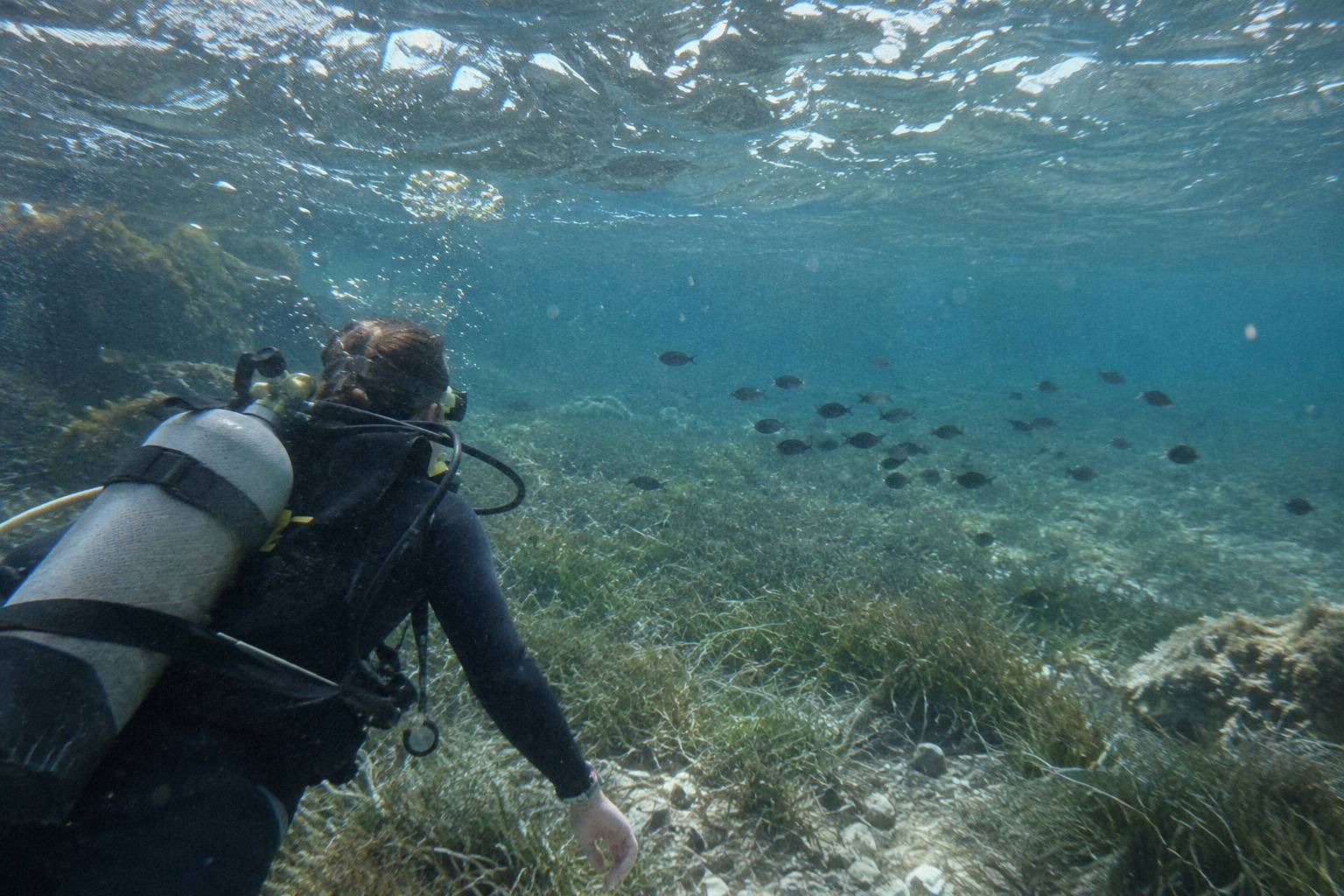
The three published figures cluster in a narrow band, from 8 m to 12 m, which is shallow by diving standards and deep enough to feel like a proper dive rather than a swimming pool exercise. Light still reaches those depths in the Mediterranean, the pressure change is mild, and the bottom time is generous: Omega Divers schedules an actual 45 minute dive of up to 8 m after about 25 minutes of theory, while Chania Diving Center runs about 30 minutes of theory followed by about 40 to 45 minutes underwater at a maximum of 9 to 10 m. The Salty Descents SSI Basic Diver trip spreads 12 m across two separate shore dives rather than one long descent.
| Trip | Operator And Area | Maximum Depth | Minimum Age | Base Price |
|---|---|---|---|---|
| Try Dive With Photos | Chania Diving Center, Chania area | 9 to 10 m | 8 | from €120 per person |
| Chania Beginner Try Dive | Omega Divers, Chania region | 8 m | 8 | from €120 per person |
| Two Shore Dives, SSI Basic Diver | Salty Descents, Kalyves | up to 12 m | 10 | from €180 per person |
| Four-Hour Try Dive | Horizon Diving, Heraklion area | Ask the operator | 8 | from €99 per person |
| Six-Hour Intro Dive | CRETANDIVERS, Agia Pelagia | Ask the operator | 8 | from €70 per person |
| Two-and-a-Half-Hour Try Dive | Sailingcrete, Heraklion area | Ask the operator | Ask the operator | from €70 per person |
Note the middle of that table. Horizon Diving, CRETANDIVERS and Sailingcrete all run beginner dives and none of them gives a depth figure, which is why a general answer for the island cannot be built from these trips. Their sessions are no less real for it. Horizon Diving calls its four-hour session an entry-level program for the whole family; CRETANDIVERS runs a shore dive in Agia Pelagia bay with hotel pick up and drop off; Sailingcrete trains you before the dive and asks only for reasonable physical condition. If depth is the thing deciding your booking, the three trips that publish a number give you something to compare, and the others need a question sent before you pay.
The comparison that matters for most nervous first-timers is between 8 m and 10 m, and the difference is smaller than it looks. Eight metres is roughly the depth where colour starts to soften and the surface stops being a place you can chat from; ten metres is a breath more of the same. Neither trip will drop you to the maximum and leave you there. The instructor descends with you, watches your comfort the whole way, and turns the dive shallower if anyone's breathing goes ragged. That is what the ratios are for: Omega Divers assigns one instructor per 2 adults and one instructor per child, which means an eight-year-old never shares supervision with a pair of adults.
How Deep Can An Eight-Year-Old Go?
Children aged 8 to 10 on the Omega Divers try dive reach a maximum of 2 m, not the 8 m the adults in the same group may touch, and the ratio tightens to one instructor per child. On the Chania Diving Center trip the minimum age is also 8 and the published maximum is 9 to 10 m, with no separate child depth, so the two operators answer the same question differently for the same age of swimmer.
The 2 m figure is worth sitting with, because it is the single most concrete child-depth number on any trip here. Two metres is chest height in a swimming pool. A nervous eight-year-old on the Omega Divers session is never more than an arm's reach from the surface, breathing from a tank, but shallow enough that looking up means looking at daylight with no distortion. The same operator then takes the adults in the family to 8 m on the same 45 minute dive, so a family booking splits naturally by depth rather than by activity.
Other trips set the entry bar at 8 without publishing a child-specific limit. Horizon Diving, CRETANDIVERS, Salty Descents and the Chania Diving Center combined snorkel-and-dive boat trip all name 8 as the minimum age, and Horizon Diving frames its program as being for the whole family. For a fuller walk through ages, and the snorkel trips that start younger still, the page on the minimum age for a first dive on Crete covers every trip with a figure.
One trap deserves a flag before it catches anyone: ages are trip-specific, and two trips here give no age at all. Sailingcrete's try dive has two disagreeing age figures in circulation, so no number can be relied on for it, and none of the Kefi Divers entries carries an age. Never assume the youngest age you read elsewhere applies to the trip you are actually booking. Ask, and if the answer is vague, book the trip where it is not.
The Chania Diving Center trip deserves its own paragraph here, because it is the one that pairs a published depth with published photos. After about 30 minutes of theory it puts you underwater for about 40 to 45 minutes at a maximum of 9 to 10 m, and the underwater photos come free, which matters to families who want proof an eight-year-old actually went under with a tank on. Gear, snacks, fees, an air-conditioned vehicle and diving insurance are all part of the fare; bring your own swimsuit and towel, and arrange your own way to the base at Agios Onoufrios near Kounoupidiana, since transfers from Georgioupoli, Heraklion, Rethymno, Elounda and Agios Nikolaos are not part of it.
The trip runs from €120 per person, holds 4.8 from 54 reviews, and can be checked for open dates through its tour page or directly via Check availability. Free cancellation applies up to 24 hours before the start, with a weather condition attached.
Is 2 M Enough For A Child To Feel The Dive?
Yes, and usually more than enough. The sensation that stays with a child is breathing underwater, not depth. At 2 m the regulator works exactly as it does at 10 m, the fish behave exactly as they do at 10 m, and the instructor is close enough to hold a hand the entire time. Depth is the dimension adults compare trips by; the memory an eight-year-old keeps is of the water going quiet.
Is There A Try Dive That Goes To 12 M?
Yes, but it is not a single try dive: the Salty Descents Two Shore Dives trip, from €180 per person, takes beginners to depths of up to 12 m spread across two separate shore dives from Kalyves, with a minimum age of 10. It carries the "SSI Basic Diver Certification", an entry-level certificate limited in depth, which is a different product from a plain try dive even though it still is not Open Water.
The structure explains the depth. Two dives give a beginner a first descent to settle nerves, a surface interval, and a second descent where the body already knows what pressure feels like, which is the only reason 12 m is reasonable for a newcomer. The trip runs 5 hours, includes scuba equipment, digital learning materials on the SSI application, insurance, bottled water and fresh fruit or a light snack, and gets you around on an air-conditioned vehicle. Bring a towel and swimsuit; that is the whole kit list. Photos and videos are part of the description of the day.
Salty Descents also runs a plain three-hour try dive from Kalyves, from €105 per person, minimum age 8, with instructor guidance covering theory, practice and skills, small groups, a snack and insurance. It gives no depth figure, and the same goes for the recognition card it hands out afterwards: a record of the session, not a certificate with a depth allowance. Free cancellation up to 24 hours before the start applies to both, with a weather condition.
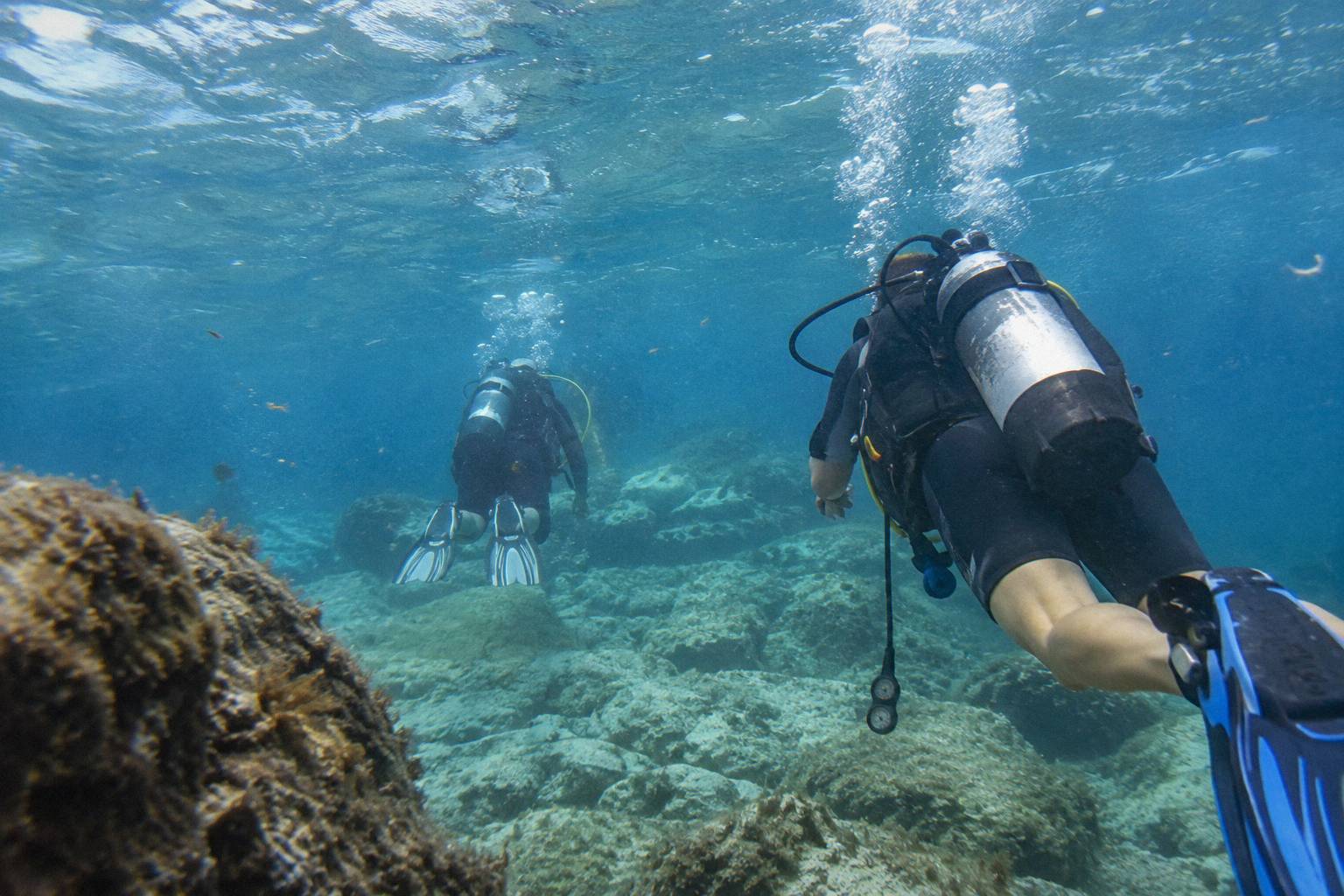
The 12 m ceiling on that trip sits at the top of the beginner band here, but it should not be read as a ladder to climb. Nothing in any of these trips rewards going deeper; the dive turns when the group is done, the air is at its planned reserve, or the instructor decides comfort has run its course. A diver who spends 45 minutes at 6 m and surfaces smiling has had a better dive than one who touched 12 m for a minute and spent the rest anxious.
Why Do Some Trips Stay Silent About Depth?
Several Crete operators, including Horizon Diving, CRETANDIVERS, Sailingcrete, Salty Descents' single try dive, the combined snorkel-and-dive boat trip and every Kefi Divers dive, publish no depth figure because depth is set on the day by the site, the group and the conditions. A trip without a stated maximum can still be a shallow, well-supervised first dive or reach whatever the operator judges safe, so nervous first-timers should ask directly before booking.
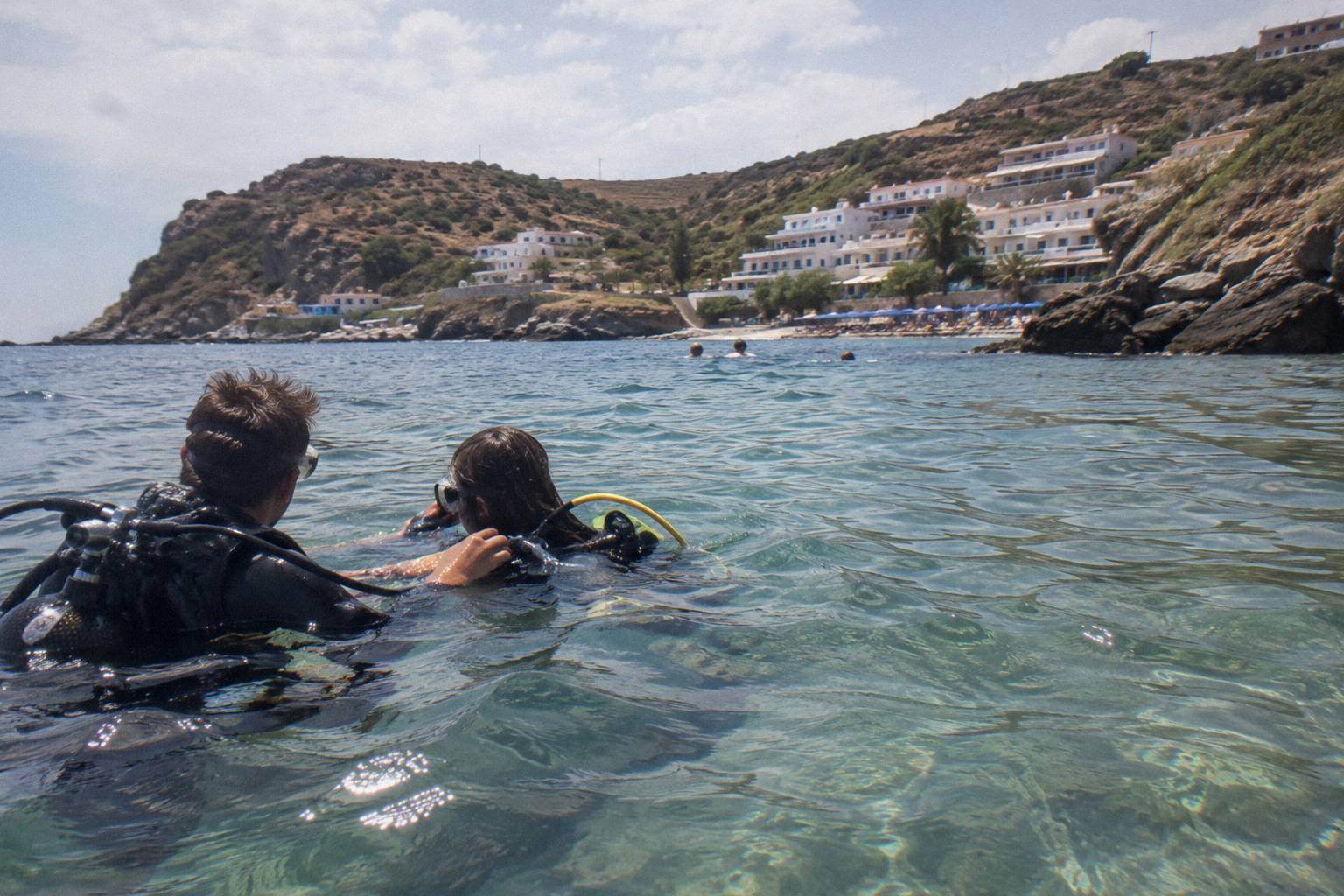
There are fair reasons a centre keeps depth out of its description. Shore dives from Agia Pelagia or Kalyves follow the seabed, which slopes gradually, so the depth of the dive is the depth of the route walked that morning. Boat trips choose between sites by conditions. A fixed number in the description would be a promise the sea does not always keep. The cost of that flexibility is that the nervous first-timer, comparing trips side by side, cannot see what they are comparing.
The fix is a question, phrased plainly: how deep does this session actually go, and will the instructor stay beside me the whole time. Operators answer this daily.
Two of the silent trips deserve a mention for what they do publish. CRETANDIVERS runs a six-hour day from €70 per person with hotel pick up and drop off, PADI instructors, water and an air-conditioned vehicle, though the photo and video session costs extra. Sailingcrete's two-and-a-half-hour session, also from €70, includes training before the dive, scuba equipment and an instructor, excludes towels, private transport, food and drinks, and carries the operator's own caution that it is not a certified scuba diving course. Both are cheap, real first dives, and both need the depth question asked in advance.
Does The Instructor Stay At Your Depth?
On every trip here with a described structure, yes. The Omega Divers ratio of one instructor per 2 adults and one per child, and the Kefi Divers caps of 4 divers per instructor on guided dives and 2 on refresher dives, all describe the same arrangement: a professional in the water with the group, at the group's depth, for the length of the dive. On a try dive the group is one or two beginners, so the professional is effectively yours.
Does The Depth Of A Try Dive Come With A Certification?
No. A try dive is an introduction and never a certification, whatever the wording of a trip title, and no trip on Crete in the range covered here books an Open Water or Advanced course at any price. Three product titles use the word certification in their own wording and each refers to a recognition card or an entry-level limited-depth certificate, which certifies no one as a diver.
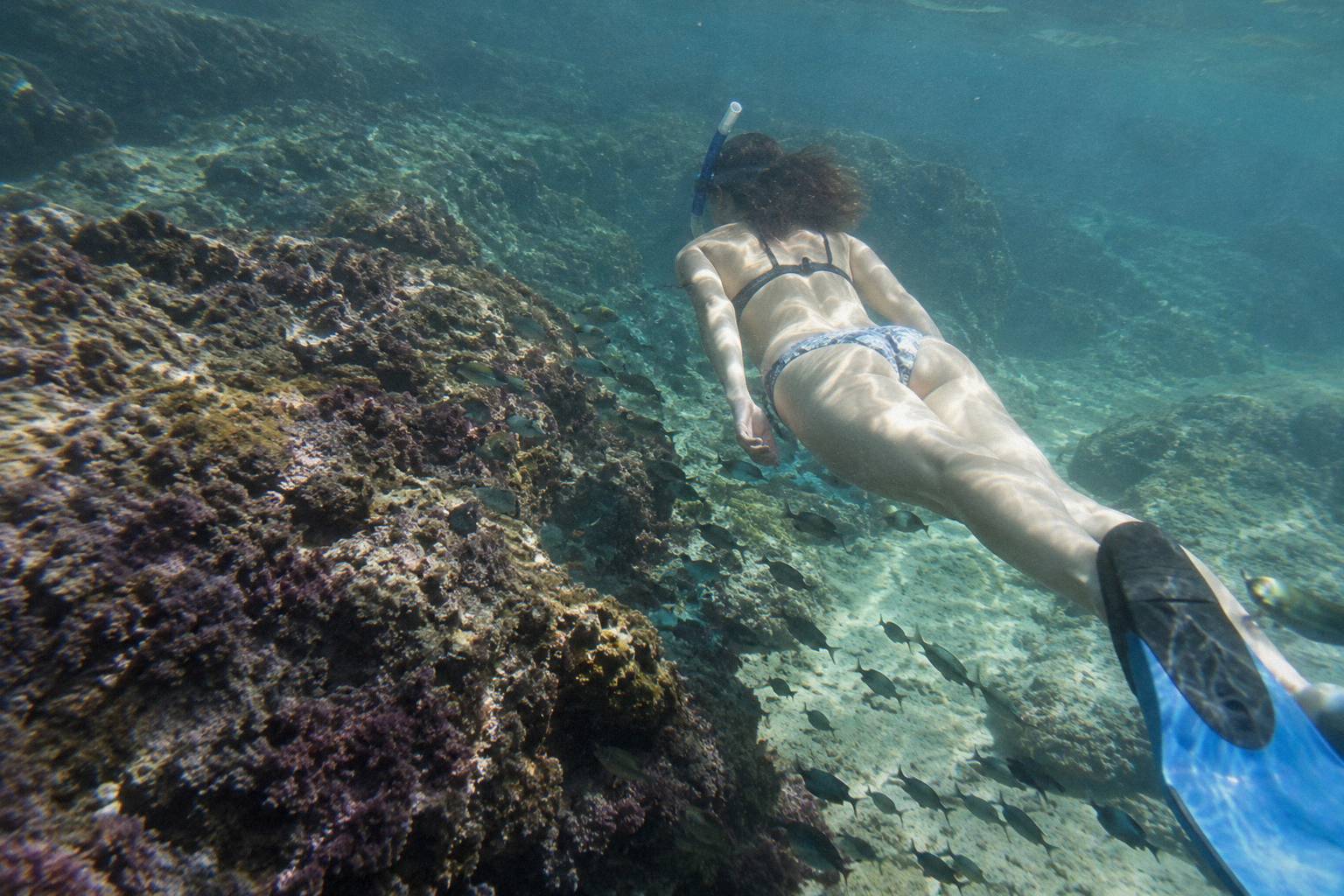
The wording is the trap, so here is each one decoded. Chania Diving Center's try dive with photos carries the title "Free Certification", and what it describes is a free SSI Try Scuba Recognition Card: a record that you did the dive. The combined snorkel-and-first-dive boat trip's inclusions say "Scuba Diving Certification", and that too is an SSI Try Scuba Recognition Card, not a diving certificate. The guided snorkel boat trip's inclusion line "Snorkeling Diver Certification" is a snorkel record. Sailingcrete's own wording cuts the other way and says outright that its session is not a certified scuba diving course. Omega Divers calls its beginner session a "PADI Discover Scuba Diving" experience with a PADI professional guide, and Salty Descents' try dive hands over a recognition card after the activity.
The Salty Descents Two Shore Dives trip is the one case where a real certificate changes hands, and its limits are the whole story. The "SSI Basic Diver Certification" is an entry-level certificate limited in depth, from a two-dive beginner program with a minimum age of 10. It is not Open Water and not Advanced, and holding it does not unlock deeper sites on its own. The fuller argument is on whether a try dive counts as a certification, and for anyone starting from zero, diving without a certification explains how far a beginner can go with no card at all.
None of this changes the depth answer. A recognition card does not deepen a try dive, and the absence of one does not shallow it. The card is a souvenir with a name on it; the depth is a decision the instructor makes with you on the day, within the maximum the trip publishes or the maximum the operator judges when nothing is published.
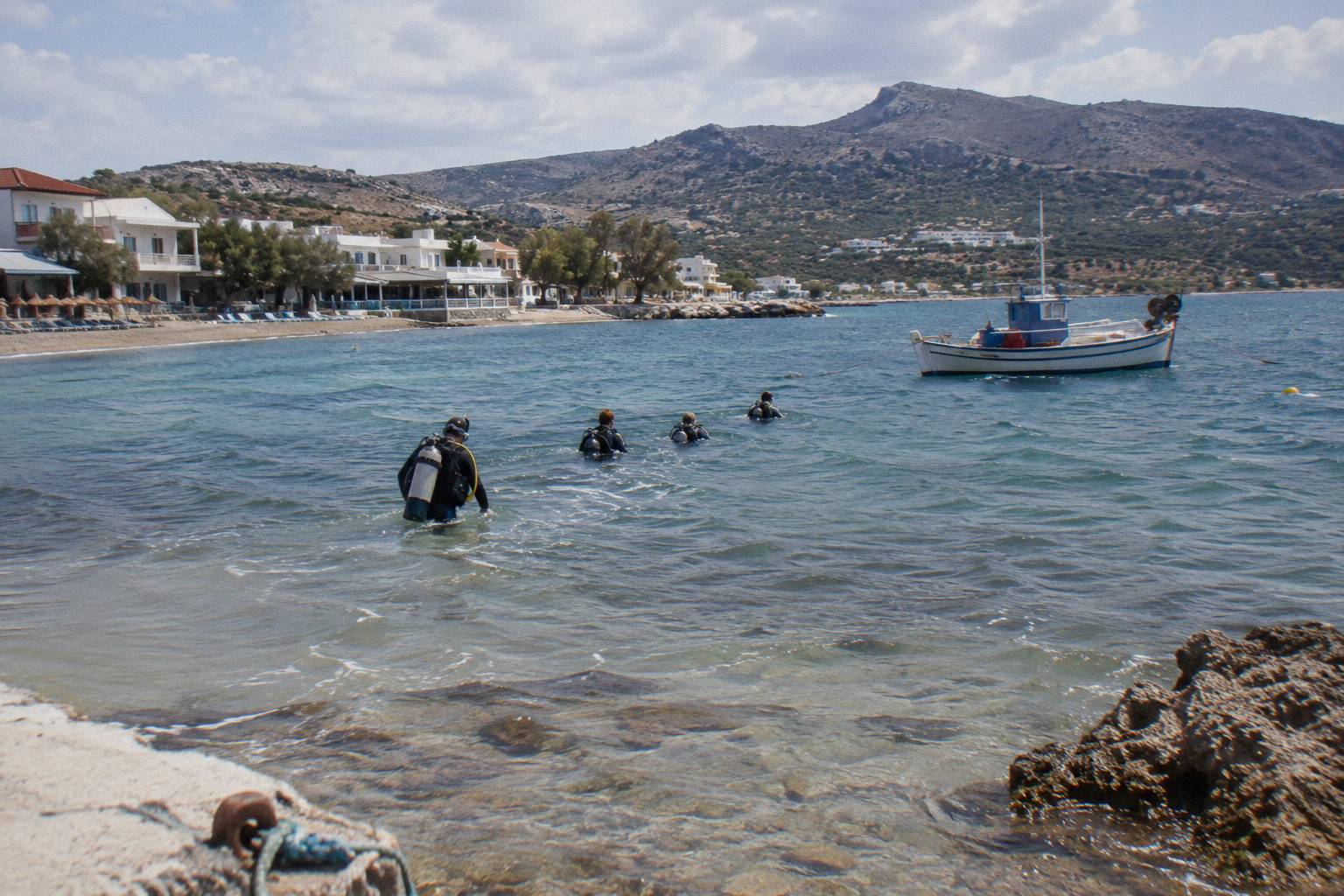
How Does Try Dive Depth Compare With Certified Diving On Crete?
Only one certified trip gives a depth: the Omega Divers dive trip for certified divers puts the Minnewaska wreck at about 20 m and sets a minimum age of 18, while the Elephant Cave and Minnewaska day from Chania Diving Center names two dives without a depth figure and requires a valid certification card. Certified shore dives from Kefi Divers at Almyrida and boat dives from the same base carry no published depth either.
Twenty metres against 8 to 12 m is the clean comparison, and it is the Omega Divers trip that supplies both halves, since the same operator runs the beginner session at 8 m and the certified trip at the wreck. The 4 hour 30 minute certified day includes two dives with a break between them, a box of local delicacies and bottled water during that break, scuba equipment, an air-conditioned vehicle and free pickup and drop-off, from €170 per person. It is a dive trip rather than a boat outing: the craft is not described, so no claim is made about it here.
The Chania Diving Center certified day, from €160 per person, is a 5-hour two-dive outing naming the Elephant Cave and the SS Minnewaska wreck, minimum age 12, guided by professional dive masters and instructors, with full rental equipment except computers, snacks, fees, an air-conditioned vehicle and insurance. Photos and video cost extra if you want them, and the operator calls the Elephant Cave one of the most renowned and iconic dive sites in the Chania area and in all of Greece, which is its own wording rather than a measured claim. The same centre lists 20 or more dive sites from beginner to technical, including the Cathedral, Seal Cave and the tugboat Nestor in the Chania diving park at Ombrosgialos.
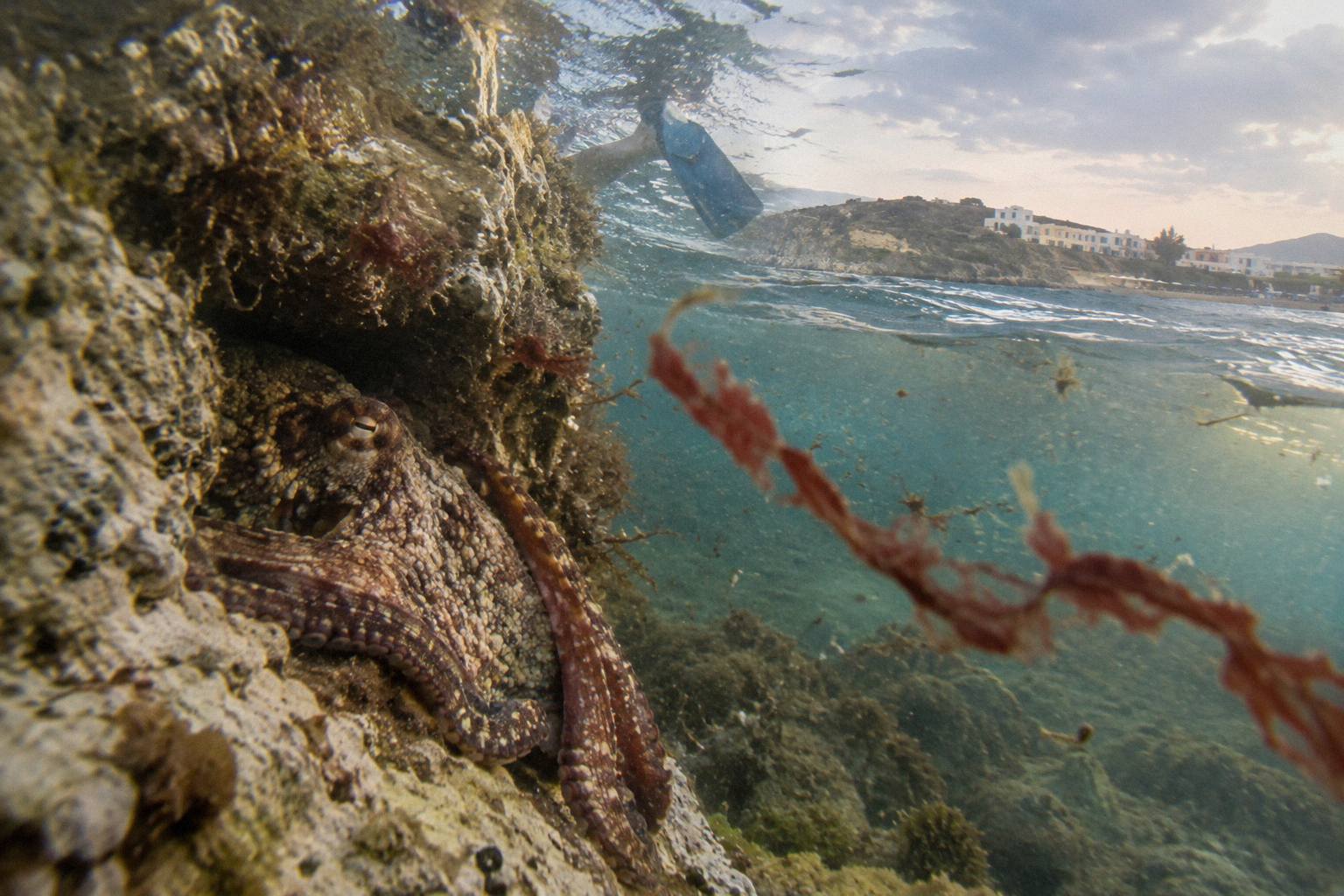
Between the beginner and certified ends sit the guided trips for divers with a card. Kefi Divers runs certified shore dives at Almyrida, usually Koutalas bay, from €100 per person, 3 hours, maximum 4 divers per instructor, full equipment, minimum age 11, plus two-dive boat trips from €145 per person with water, Greek tea and a snack bar, and a refresher for returning divers from €110 per person that pairs shallow-water skills with one guided shore dive, maximum 2 divers per instructor. The refresher is the depth-relevant one for a lapsed diver: it deliberately starts shallow before the guided dive, and the full thinking on refreshers sits with the comparison of Crete dive trips by experience level.
| Trip | Who It Is For | Published Depth | Minimum Age | Base Price |
|---|---|---|---|---|
| Chania Beginner Try Dive | Beginners | 8 m, 2 m for ages 8 to 10 | 8 | from €120 per person |
| Two Shore Dives, SSI Basic Diver | Beginners, two dives | up to 12 m | 10 | from €180 per person |
| Omega Certified Boat Dives | Certified divers | about 20 m at the Minnewaska | 18 | from €170 per person |
| Elephant Cave Two-Dive Day | Certified divers | Ask the operator | 12 | from €160 per person |
| Certified Shore Dives | Certified divers | Ask the operator | 11 | from €100 per person |
The gap between the columns is the point. Depth on Crete is not a function of the sea, which is the same sea for everyone, but of the card in your hand and the trip you picked. A beginner tops out at 12 m on the deepest beginner trip here, and a certified diver on the same coastline reaches 20 m at a century-old troopship. The wreck itself is protected under Greek heritage law administered by the Ephorate of Underwater Antiquities, which treats vessels more than 50 years old as monuments and expects divers to look and not touch.
What Trips People Up When Booking A Try Dive?
The three classic slips are assuming one depth applies island-wide, reading the word certification in a trip title as a qualification, and booking on price alone while the figures that matter, depth, age and ratio, sit unasked. Each is avoidable in a minute: match the trip to the published depth, decode the title's wording, and send the operator the depth question before paying.
The first slip is the depth assumption, and this whole page exists because of it. A traveller who reads that Omega Divers goes to 8 m may book Sailingcrete expecting the same, and Sailingcrete publishes nothing, so the expectation is imported from a different product. The fix is mechanical: use the table above, and if the row says Ask the operator, the question goes to the operator before money changes hands, not to the sea on the day.
The second slip is the title trap, covered in detail above but worth a closing warning, since it catches people at checkout rather than at reading. "Free Certification", "Scuba Diving Certification" and "Snorkeling Diver Certification" are product wording, not qualifications, and the entry behind each describes a recognition card. Nobody walks off a try dive certified. If a recognition card matters to you as a souvenir, the Chania Diving Center and Salty Descents trips hand them over; if a real entry-level certificate is the goal, the SSI Basic Diver trip is the one that issues it, limited in depth and requiring two dives.
The third slip is the medical form, which is not a slip so much as a surprise on the day. A first dive asks you to complete a medical questionnaire, a standard PADI step for entry-level programs, and answer every question on the form fully. A condition answered yes does not always end the booking, but it can, and discovering that at the dive base is worse than discovering it at home. Related friction: the minimum ages vary by trip, from 8 on most try dives up to 18 on the Omega Divers certified trip, and two trips give no age at all, so a family with a ten-year-old needs the age line before the deposit.
Two smaller tripwires close the list. No trip here names a no-fly interval, so a diver flying home the same evening should raise it when booking; DAN, the Divers Alert Network, recommends a minimum preflight surface interval of 12 hours after a single no-decompression dive and 18 hours after multiple dives in a day or multiple days of diving. And cancellation terms differ: every trip with cancellation data here offers free cancellation up to 24 hours before the start with a weather condition, except the Olous sunken city snorkel, which carries no free-cancellation promise at all. Booking on price alone, from €70 at the bottom, without checking those terms, is how a windy morning becomes a lost fare rather than a rescheduled dive. The page on whether weather cancels Crete dive trips works through the detail. Whichever trip you land on, Crete Scuba Diving keeps the depth, age and price figures for every entry side by side, so the comparison stays a one-screen job.
Common Questions About Try Dive Depth On Crete
How Deep Does A Try Dive Go On Crete?
Only three trips publish a figure: Omega Divers up to 8 m, Chania Diving Center to a maximum of 9 to 10 m, and the Salty Descents SSI Basic Diver trip to 12 m across two shore dives. Every other try dive leaves depth to the operator's judgement on the day, so ask before booking if the number matters to you.
How Deep Can A Child Go On A Try Dive?
On the Omega Divers trip, children aged 8 to 10 reach a maximum of 2 m, with one instructor per child. The Chania Diving Center trip sets the same minimum age of 8 with no separate child depth published. Most other try dives here name 8 as the minimum age without a child-specific limit.
Is A 10 M Try Dive Scary?
Ten metres is about three storeys down, and the descent is slow and controlled with an instructor beside you the whole way. The trips that publish these figures, Omega Divers and Chania Diving Center, schedule roughly 45 minutes of theory first and about 40 to 45 minutes underwater, so the depth arrives after the briefing, not as a surprise. Anyone uncomfortable simply levels off shallower.
Does The 12 M SSI Basic Diver Trip Go Deeper Than A Try Dive?
Yes, it reaches up to 12 m, but across two separate shore dives with a minimum age of 10, from €180 per person. It issues an entry-level certificate limited in depth, which is not Open Water and not Advanced. It is the deepest beginner trip with a published figure on the island.
Can I Ask The Operator For A Shallower Dive?
Yes, and it works. Depth on a beginner dive is the instructor's call, and a request to stay shallow is routine on every trip here. On trips that publish no depth at all, asking in advance is the only way to know the maximum before the day.
Will I Need To Fly Home The Same Day As A Try Dive?
No trip here names a no-fly interval, so raise it when booking. DAN, the Divers Alert Network, recommends a minimum preflight surface interval of 12 hours after a single no-decompression dive, and 18 hours after multiple dives in a day or multiple days of diving.