Can You Scuba Dive On Crete Without A Certification?
Yes: a try dive needs no certification. Which Crete trips take non-divers, what the recognition card wording means, what certified trips require, depths, ages and the medical questions.
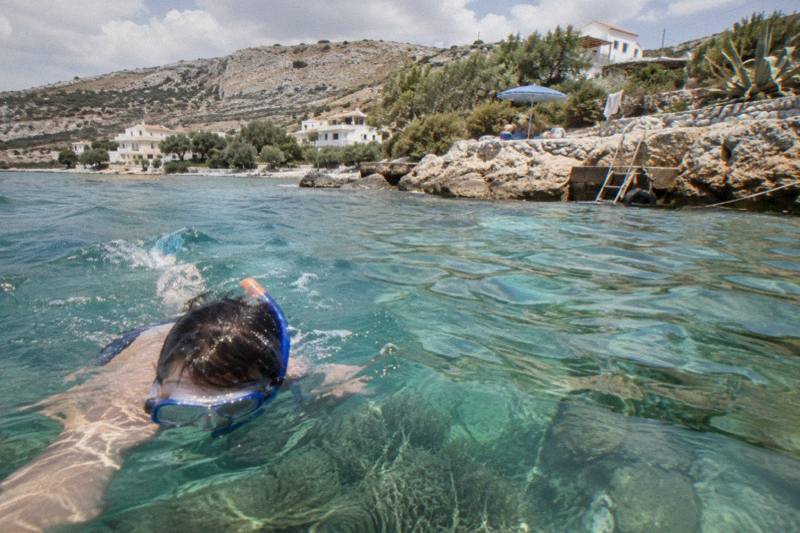
Yes, you can scuba dive on Crete without a certification by booking a try dive, a supervised introduction to scuba for complete beginners, with several operators on the island offering them from €70 per person at the budget end, and from €120 per person for trips that include photos and a PADI professional guide.
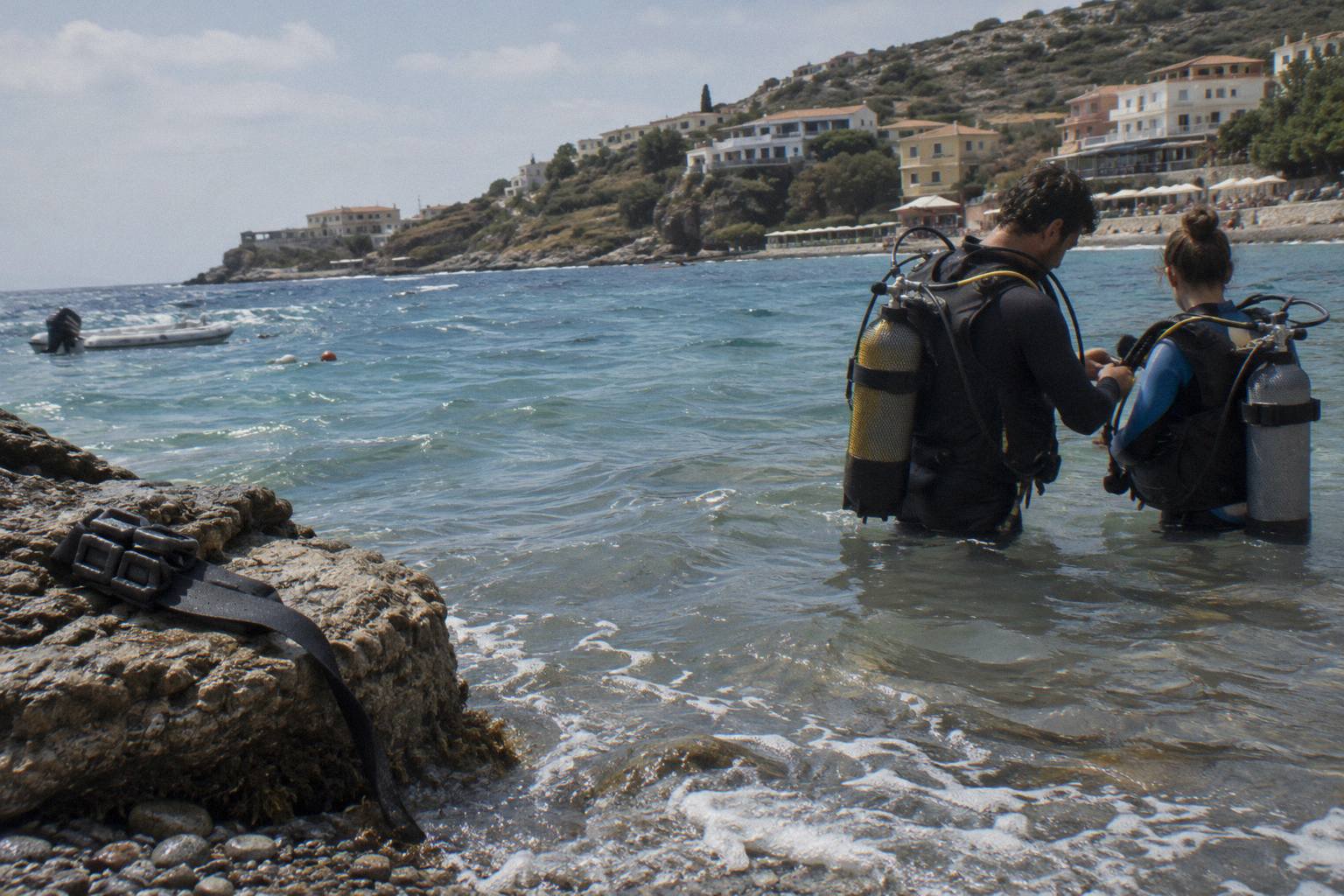
The mechanism is simple and it is the same almost everywhere in the diving world: an instructor takes a small group into shallow, controlled water, after a short theory session on land, and the beginner breathes underwater under direct supervision the whole time. The depth is limited, the group is small and the instructor stays with the divers throughout. Nobody becomes a certified diver from one of these sessions; the outcome is the experience itself, plus, on some trips, a recognition card as a souvenir of the day.
On Crete the try-dive format appears in several shapes: a shore dive in a bay at Agia Pelagia from €70 per person, a beginner session in the Chania region from €120 per person with one instructor per two adults and one per child, a four-hour family program in the Heraklion area from €99 per person, and a combined boat day that mixes a first scuba dive with snorkelling from €200 per person. The full spread, with ages and what each one includes, sits in the section below on trips that need no card.
One wording trap deserves a flag before anything else. A few product titles and inclusion lines use the word certification, for example a title that reads "Free Certification", and that can suggest a diver qualification is being handed out. It is not. Those words refer to a recognition card, an SSI Try Scuba record or a snorkel record, and the difference between that and a real certification is the difference between a souvenir and a licence to dive. The section on the certification wording explains exactly what each card is and is not.
The question matters more than it looks, because plenty of travellers arrive on the island with a holiday flight booked and no diving history at all, and they reasonably wonder whether anything on offer is open to them. It is. Below, the trips are laid out by what they demand of the diver: nothing but a swimsuit and a minimum age, a short swim ability, or a card held already.
What Is A Try Dive, Exactly?
A try dive is a single, supervised first dive in which a non-diver breathes underwater under an instructor's direct control, preceded by a short theory session. In Crete, where stated, the theory portion runs about 25 to 30 minutes, followed by a dive of 40 to 45 minutes at depths of up to 8 m or 9 to 10 m. It is an introduction, never a course and never a certification.
The shape of the session is consistent across operators even when the details differ. Horizon Diving in the Heraklion area calls its trip an entry-level program in an environment it describes as aimed at beginners, for the whole family, with equipment, a small snack and water included. Omega Divers in the Chania region runs the PADI Discover Scuba Diving format: about 25 minutes of theory, then an actual 45 minute dive to up to 8 m, with children aged 8 to 10 limited to a maximum of 2 m, and staffing of one instructor per 2 adults and one per child. Chania Diving Center gives about 30 minutes of theory and about 40 to 45 minutes underwater at a maximum depth of 9 to 10 meters, from its base at Agios Onoufrios near Kounoupidiana.
Sailingcrete, in the Heraklion area, states its own limit plainly in its own words: it is, per the trip wording, "not a certified scuba diving course". That line is worth taking at face value, because it captures the whole category. Nothing in a try dive counts towards a certification, and no operator among the trips covered here treats it as one. It asks for reasonable physical condition, gives training before the dive, and includes an instructor and scuba equipment.
The mixed boat day from Chania Diving Center works the same way for its diving half: one first scuba dive plus snorkelling at two stops, with no experience or certification needed, full snorkel and scuba gear, underwater photos and video, a light snack and water. Non-divers in the group can snorkel at both stops, which makes it a workable answer for a party where only some people want to breathe from a tank.
The natural companion question, whether that first dive counts for anything later, has its own answer: a recognition card may come home in the pocket, and whether a try dive counts as a certification is worth reading before the wording on a booking page creates the wrong impression. Short version: it does not, and no trip here pretends otherwise.
Which Crete Trips Need No Certification?
Nine trips on the island take non-divers with no card: four try dives from €70 to €120 per person, a two-dive SSI Basic Diver program from €180 per person, a combined scuba-and-snorkel boat day from €200 per person, and two more where the price is on the booking page. Minimum ages run from 8 on most trips; one states no age because two figures disagree. Every one includes an instructor and full scuba equipment.
The table below lists every trip that a complete beginner can book. Prices are per person unless a trip says otherwise, ages are the operator's own minimum, and the duration is the total trip length, not the time underwater.
| Trip | Operator | Base | Price | Minimum Age | Duration |
|---|---|---|---|---|---|
| Four-Hour Try Dive | Horizon Diving | Heraklion area | from €99 | 8 | 4 hours |
| Chania Beginner Try Dive | Omega Divers | Chania region | from €120 | 8 | 3 hours |
| Try Dive With Photos | Chania Diving Center | Agios Onoufrios, Chania area | from €120 | 8 | 3 hours |
| Six-Hour Intro Dive | CRETANDIVERS | Agia Pelagia bay | from €70 | 8 | 6 hours |
| Two-and-a-Half-Hour Try Dive | Sailingcrete | Heraklion area | from €70 | Ask the operator | 2 hours 30 minutes |
| Beginner Shore Dive | Salty Descents | Kalyves | from €105 | 8 | 3 hours |
| Two Shore Dives, SSI Basic Diver | Salty Descents | Kalyves | from €180 | 10 | 5 hours |
| Kefi Divers Try Dive | Kefi Divers | Almyrida | check the booking page for the price | Ask the operator | Ask the operator |
| Try Dive Plus Snorkel, By Boat | Chania Diving Center | Chania area | from €200 | 8 | 4 hours |
Reading the table, the price spread has a logic to it. The two €70 trips are the plain formats: CRETANDIVERS runs a shore dive in Agia Pelagia bay with hotel pick up and drop off, bottled water and an air-conditioned vehicle, while the photo and video session is excluded; Sailingcrete gives training before the dive, an instructor and equipment, with towels, private transport, food and drinks excluded. The €120 trips add structure and extras: Omega Divers includes liability insurance, a PADI professional guide, full gear, photos, a short video and hotel pickup within the Chania region, and Chania Diving Center adds free underwater photos, snacks, an air-conditioned vehicle and diving insurance.
The two-deep end of the beginner range is occupied by two different animals. The Salty Descents Two Shore Dives trip, from €180, is two shore dives reaching depths of up to 12 meters, with an entry-level certificate attached that is explained in the next section; it is the closest thing to a course among the beginner options, and it still is not Open Water. The combined boat day, from €200 with 4.9 from 87 reviews, is a half-and-half day: one first scuba dive plus snorkelling at two boat stops.
For families, the age column is the deciding one, and the operators differ: Kefi Divers states no age for its try dive, while most others set the bar at 8. The details of each trip's age rules, including the 2 m limit for children aged 8 to 10 on the Omega Divers dive, are gathered in how old you have to be to try scuba diving.
The Try Dive With Photos trip from Chania Diving Center is a reasonable default for a first-timer who wants evidence: a shore dive per the operator's page, free underwater photos, gear, snacks, fees, an air-conditioned vehicle and diving insurance all included, with swimsuit and towels to bring. It rates 4.8 from 54 reviews, from €120 per person, and free cancellation up to 24 hours before the start. Try Dive With Photos trip details are on the tour page, or check availability at the operator directly.
What Is The 'Certification' On The Booking Page?
The wording is worth untangling because it appears in exactly the places a beginner looks. The Chania Diving Center Try Scuba With Photos trip carries the title "Free Certification", and the trip itself describes a free SSI Try Scuba Recognition Card. The combined scuba-and-snorkel boat day lists "Scuba Diving Certification" among its inclusions, which is the same kind of SSI Try Scuba Recognition Card rather than a diving certificate. The guided snorkelling boat trip lists a "Snorkeling Diver Certification", which is a record of a snorkelling session, not a scuba qualification at all. Salty Descents gives "a recognition card" after its beginner shore dive. All of these are keepsakes of the day.
| Product wording | Where it appears | What it actually is | What it is not |
|---|---|---|---|
| "Free Certification" | Chania Diving Center Try Dive With Photos | a free SSI Try Scuba Recognition Card | a diver certification or a course |
| "Scuba Diving Certification" | Chania Diving Center combined scuba and snorkel boat day | an SSI Try Scuba Recognition Card | a diving certificate |
| "Snorkeling Diver Certification" | Chania Diving Center guided snorkelling boat trip | a snorkel record | any scuba qualification |
| "a recognition card" | Salty Descents beginner shore dive | a record of the activity | a certification |
| "SSI Basic Diver Certification" | Salty Descents Two Shore Dives | an entry-level certificate limited in depth | Open Water or Advanced |
The one genuinely different entry in that table is the last. The Salty Descents Two Shore Dives trip, from €180 per person with a minimum age of 10, includes what it calls an "SSI Basic Diver Certification": an entry-level certificate that is limited in depth, which on this trip means two shore dives reaching depths of up to 12 meters. It is a real step up from a single try dive, with digital learning materials on the SSI application included alongside equipment, a snack and insurance. It is still not Open Water, not Advanced, and not a licence to dive independently, and no Open Water or Advanced course can be booked among the trips covered here, so nothing here should be read as a first step towards one.
For a beginner deciding between the two Salty Descents formats, the distinction is price and commitment: the single shore dive from €105 gives instructor guidance through theory, practice and skills in small groups with photos and videos mentioned, while the two-dive program from €180 adds the second dive, the deeper limit and the certificate. Both include scuba equipment, insurance, bottled water and fresh fruit or a light snack, with towel and swimsuit to bring.
How Deep Does A First Dive Go?
Where a figure is given, first dives stay shallow: up to 8 m on the Omega Divers trip with children aged 8 to 10 limited to 2 m, and 9 to 10 meters on the Chania Diving Center trip, both after 25 to 30 minutes of theory. The Salty Descents two-dive program reaches up to 12 meters. No depth figure is given for the other beginner trips, so none appears here: ask the operator when booking.
The depth question is where beginners most often get tangled expectations, because the numbers are small and the experience is not. Ten meters is deep enough that sunlight goes blue-green, the surface is visible but distant, and fish treat a slow-breathing newcomer as part of the scenery. The figures below are per product only, exactly as each trip gives them, and they should never be generalised to "a try dive on Crete".
| Trip | Theory | Time underwater | Maximum depth |
|---|---|---|---|
| Chania Beginner Try Dive, Omega Divers | about 25 minutes | 45 minutes | up to 8 m, children 8 to 10 up to 2 m |
| Try Dive With Photos, Chania Diving Center | about 30 minutes | about 40 to 45 minutes | 9 to 10 meters |
| Two Shore Dives, SSI Basic Diver, Salty Descents | digital learning materials | two dives | up to 12 meters |
Note what the table does not say. No depth appears for the Horizon Diving, CRETANDIVERS, Sailingcrete, Salty Descents single-dive, Kefi Divers or combined-boat beginner trips, because none of those trips gives one. That is not a gap to fill with a plausible number: the plain reading of a booking page is that the depth depends on conditions and the group on the day, and the instructor decides. The question is worth asking directly at booking, alongside the ones in the section on what trips people up.
Chania Diving Center's own try-scuba material adds context a beginner can use: it asks learners to swim a little and not fear water, and it says the instructor helps with equalising, the ear-pressure skill that trips up more first-timers than anything else. Full diving insurance is given to every guest on that trip. Those are that operator's lines for its own trip, and they are a fair preview of what a well-run first dive asks of a person: basic comfort in water, and the patience to let an instructor handle the rest.
For more on the numbers and what they feel like, how deep a try dive goes covers the same per-product figures in detail, and the broader planning picture for families is in kids' try scuba and snorkel trips on Crete.
What Do Certified-Diver Trips Require?
A card changes the day in kind, not just degree. The Elephant Cave Two-Dive Day from Chania Diving Center, from €160 per person with a minimum age of 12, is two different guided dives, naming the Elephant Cave, which the operator calls one of the most renowned and iconic dive sites in the Chania area and in all of Greece, and the SS Minnewaska wreck. Guided dives with professional divemasters and instructors, snacks, full rental equipment except computers and insurance are included; photos and video are optional at extra cost. The Omega Divers certified trip, from €170 per person with a minimum age of 18, is two dives with a break, visits the Minnewaska wreck at about 20 m, and is marketed by the operator as visiting the first licensed diving park in Greece; a local snack box and water come during the break.
| Trip | Operator | Price | Minimum age | Format |
|---|---|---|---|---|
| Elephant Cave Two-Dive Day | Chania Diving Center | from €160 | 12 | two guided dives, Elephant Cave and SS Minnewaska |
| Omega Certified Boat Dives | Omega Divers | from €170 | 18 | 2 dives with a break, dive trip |
| Certified Shore Dives | Kefi Divers | from €100 | 11 | guided shore dive, up to 4 divers per instructor |
| Kefi Certified Boat Dives | Kefi Divers | from €145 | Ask the operator | two guided boat dives |
| Refresher Dive | Kefi Divers | from €110 | Ask the operator | refresher skills, then one guided shore dive |
| Night Dive | Kefi Divers | from €115 | 12 | one guided night dive |
Two of those Kefi Divers trips deserve a beginner's attention even without a card, because they show where the boundary sits. The refresher dive, from €110, is explicitly for divers returning after a break: shallow-water refresher skills first, then one guided shore dive, with a maximum of 2 divers per instructor. The night dive, from €115 and age 12, is designed for certified divers, with no previous night dive needed; octopus, moray eels, lobsters and bioluminescence are listed as a chance to encounter, never a promise. A diver whose card is decades old or whose last dive was years back is the refresher's exact customer; a never-dived traveller is not.
The operators state no certification level and no number of logged dives for these trips beyond what appears here, so none is invented: a diver with an old or unusual card should ask the operator when booking, and expect the operator's checks to be exactly what the trip wording says they are. Where certified trips and sites cross paths with history, there is a hard rule in the water: Greek law places underwater cultural heritage under State protection, and Law 4858/2021 designates shipwrecks of vessels and aircraft more than 50 years old as monuments, including the objects they contain, under the Ephorate of Underwater Antiquities, the Ministry of Culture service that covers coastal and submerged antiquities throughout Greece. Divers look and do not touch.
The Medical Questionnaire And Swimming
PADI says its try dive participants complete a medical questionnaire and, depending on the answers, may need a doctor's statement confirming fitness to dive, and this applies to PADI experiences such as the Omega Divers Try Scuba. Chania Diving Center's own try-scuba page asks learners to swim a little and not fear water. Beyond those two lines, no trip states a swim test or a medical form: tell the operator when booking.
One sentence from the agency and one from the operator, and that is the whole sourced picture. PADI's line matters for the Omega Divers trip because that experience runs as a PADI Discover Scuba Diving session with a PADI professional guide, so the questionnaire is part of the format. The doctor's statement only comes into play depending on the answers, and the right move on any question is to answer every question on the form as it stands rather than guessing what the operator wants to read.
The swimming line is gentler than people fear. "Swim a little" is the operator's wording, and the same operator's page adds that the instructor helps with equalising. Flotation and buoyancy come from the equipment, the water is shallow by design, and the instructor is within arm's reach for the whole dive. The one thing that genuinely disqualifies a person is fear of the water itself, not a lack of technique. For the snorkel-only alternatives, where a non-swimmer in the family can still join, whether you need to be a strong swimmer covers the same question for snorkelling days, and the Omega Divers Souda Bay trip carries flotation aids for less confident swimmers.
Anything medical beyond that, from a cold to a heart condition to a recent surgery, belongs in the booking conversation, not in an article: the operator collects the form, and the operator's instructor makes the call on the day. No remedy, no cold advice and no fitness verdict appears here, because none is sourced.
Flying And Heritage Rules After A Try Dive
DAN, the Divers Alert Network, recommends a minimum preflight surface interval of 12 hours after a single no-decompression dive and 18 hours after multiple dives in a day or multiple days of diving. A try dive is a single shallow dive, so the 12 hour line is the relevant one; no trip entry states its own no-fly time, so ask the operator when booking. Wrecks and antiquities are protected under Greek law: divers look and do not touch.
The flying rule is the one a holiday diver most often gets wrong, because the flight home is booked and the dive is spontaneous. DAN's guidance, on its flying after diving page, is stated here as the organisation's own recommendation rather than medical advice for an individual, and it maps cleanly onto a try-dive day: one shallow, no-decompression dive, then the 12 hour minimum before boarding. A diver doing the two-dive Salty Descents program is in multiple-dive territory, where the minimum becomes 18 hours. After decompression dives, DAN says little evidence exists and a substantially longer interval appears prudent, though nothing among the beginner trips here involves decompression diving.
The heritage rule sounds abstract until it is not. The Minnewaska wreck, a British troopship sunk by a mine on 29 November 1916 near Marathi after leaving Souda, described by Omega Divers as built by the same company as the Titanic, is more than 50 years old and therefore a monument under Law 4858/2021, along with the objects it contains. The same protection covers ancient wrecks and submerged settlements, which is the jurisdiction of the Ephorate of Underwater Antiquities, established in 1976 as a Ministry of Culture regional service. A visiting diver's part in all of this is one sentence long: look, and do not touch.
What Trips People Up When Booking A Try Dive?
Four things catch beginners out: the word certification on product pages, which is recognition wording rather than a qualification; the age column, where one trip states no age and children 8 to 10 are limited to 2 m on the Omega Divers dive; the exclusions, since towels, swimsuits, food and in some cases transfers are not included; and cancellation, since free cancellation up to 24 hours applies to the trips with that data, while the no-price trips carry none.
The first trap is the wording, covered in full above: quote the product's own words, then ask what the card actually is. The second is age, and it cuts both ways, since an 8-year-old can join most trips but a 9-year-old on the Omega Divers dive is held to 2 m, and the Sailingcrete trip states no age at all because two figures disagree, so the family needs to ask. The third is the bring list: on most trips the swimsuit, the towel and the water shoes are the guest's problem, and on the gorge trip water shoes are a must for hygiene reasons, in the operator's own words. The fourth is money logistics: the four no-price trips carry no cancellation data, so nothing is promised here about them, and the Olous sunken city snorkel states no free cancellation either.
A fifth, quieter trap is expectations about depth and marine life. The depth figures that exist are small and per product, the ones that do not exist stay unprinted, and the fish are a chance, never a promise: the Kefi Divers night dive lists octopus, moray eels, lobsters and bioluminescence as a chance to encounter, and Chania Diving Center's boat page names sponges, corals, fish and some turtles as what its stops hold. The day is shaped by conditions and the group, which is the operator's decision space, not a brochure's.
The last trap is picking the wrong format for the party. A nervous first-timer is better served by a shore dive with a small group than by a four-hour boat day; a mixed party of divers and snorkellers is exactly what the combined boat trip from €200 is built for, since non-divers snorkel at both stops; a family with young children fits Horizon Diving's whole-family entry-level program; and a returning diver should be on a refresher, not pretending to be a beginner. The matches, resort by resort, are laid out in the guide to which Crete dive trip to book.
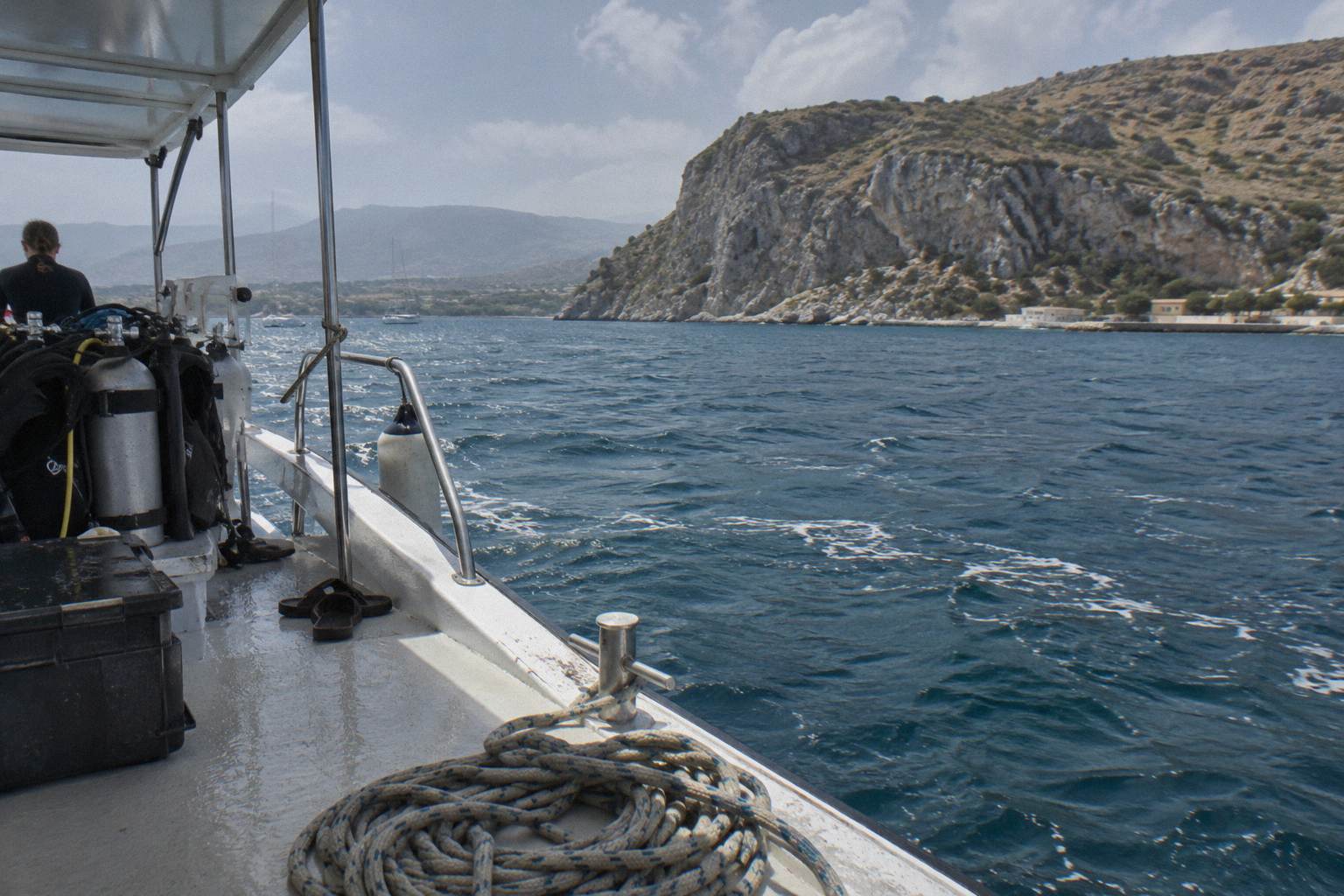
The practical close for a non-diver: pick from the nine trips that need no card, match the format to the party, read the exclusions, and answer the medical questions as they are asked. Between the €70 shore dives and the €200 combined boat day there is a workable entry point for almost every budget and every level of nerve, and none of them asks for anything the traveller does not already have except a swimsuit, a towel and an answer on a form.
For the broader picture of how the island's diving stacks up, Crete Scuba Diving covers the sites, the operators and the costs island-wide, from the same per-trip facts used here.
Common Questions About Diving Without A Certification
Can You Scuba Dive On Crete Without A Certification?
Yes, through a try dive. Nine trips take non-divers with no card, from €70 per person for the basic shore formats to €200 for a combined scuba-and-snorkel boat day, and most set the minimum age at 8. The six certified-diver trips are the only ones that require a valid certification card.
Does A Try Dive Make You A Certified Diver?
No. A try dive is a supervised introduction, and any card attached to it, such as an SSI Try Scuba Recognition Card, is a record of the session rather than a qualification. The Salty Descents two-dive program adds an entry-level SSI Basic Diver certificate limited in depth, which is still not Open Water, and no Open Water or Advanced course can be booked among the trips covered here.
What Does "Free Certification" Mean On A Dive Trip Page?
It is the product's own title for a free SSI Try Scuba Recognition Card, which does not certify anyone as a diver. The same applies to "Scuba Diving Certification" on the combined boat trip and "Snorkeling Diver Certification" on the snorkel boat trip: both are recognition or record wording, not qualifications.
How Deep Will A First Dive Go?
Where a figure is given: up to 8 m on the Omega Divers try dive, with children aged 8 to 10 limited to 2 m, 9 to 10 meters on the Chania Diving Center try dive, and up to 12 meters on the Salty Descents two-dive program. Other beginner trips state no depth, so ask the operator when booking.
Do I Need To Fill In A Medical Form?
PADI says its try dive participants complete a medical questionnaire and, depending on the answers, may need a doctor's statement confirming fitness to dive, and this applies to PADI experiences such as the Omega Divers Try Scuba. No other trip states a medical form: tell the operator when booking.
Can I Fly Home The Same Day As A Try Dive?
DAN recommends a minimum preflight surface interval of 12 hours after a single no-decompression dive, which is what a try dive is, and 18 hours after multiple dives. No trip states its own no-fly time, so ask the operator when booking.