Does A Try Dive On Crete Count As A Scuba Certification?
No, a try dive is an introduction, not a certification. A plain explanation of every 'certification' claim on Crete dive trips, from the SSI Try Scuba Recognition Card to the SSI Basic Diver.
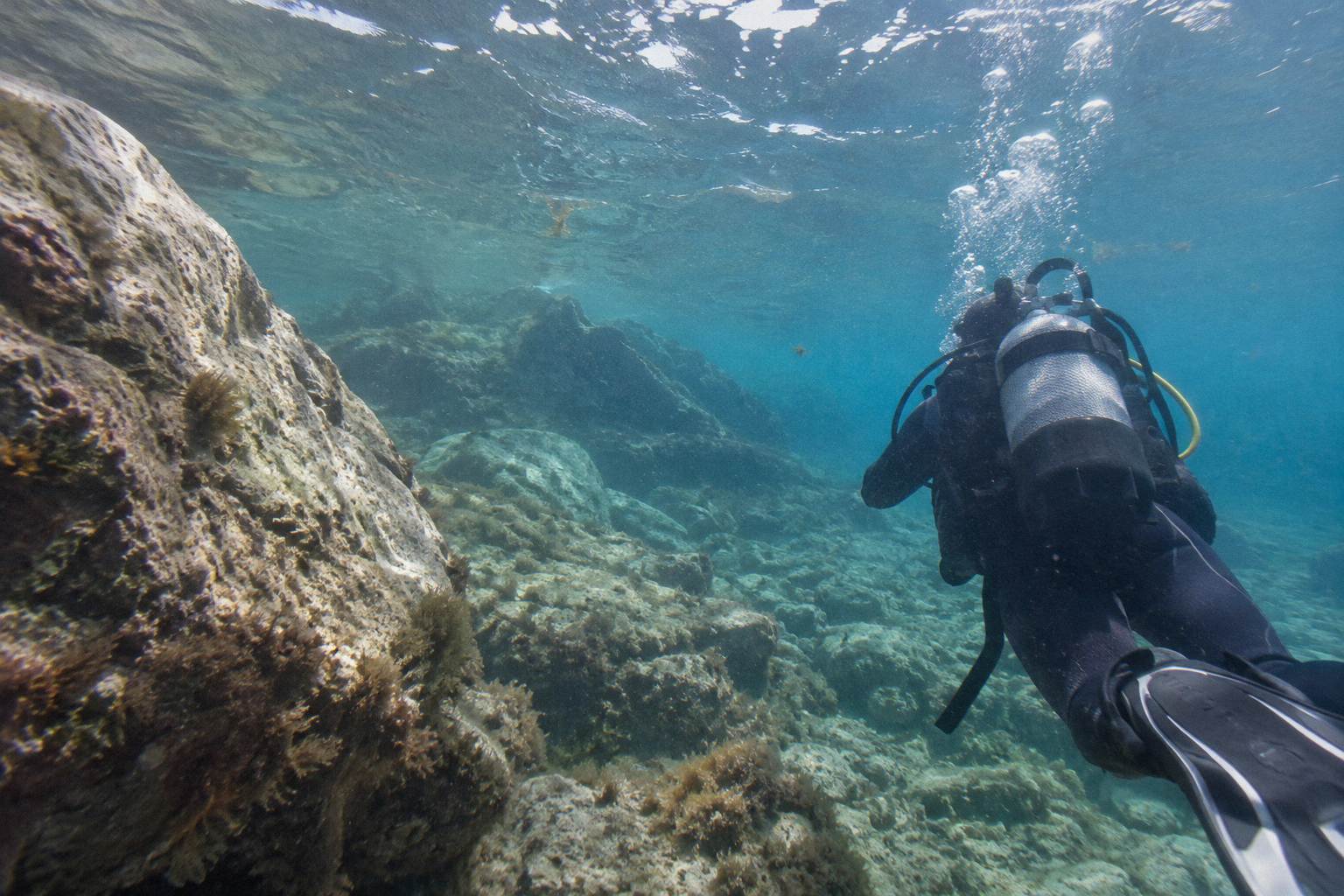
No, a try dive does not count as a scuba certification, and no trip among the twenty-two covered here books you an Open Water or Advanced course. A try dive is an introduction to breathing underwater with full gear and a professional beside you. Where a trip title or inclusion line says "certification", it names a recognition card, a snorkel record or an entry-level limited-depth certificate, and each of those is explained below, product by product.
The confusion is not the reader's fault. Three Chania Diving Center trips carry the word "certification" in their titles or inclusions: "Free Certification" on the Try Scuba With Photos trip, "Scuba Diving Certification" on the Snorkel And First Scuba Dive By Boat trip, and "Snorkeling Diver Certification" on the Guided Snorkelling Boat Trip. Those are the products' own wording, and they sit next to ordinary try-dive and snorkel descriptions. Someone comparing trips sees the word, reasonably assumes a qualification is included, and books.
The reality is simpler and less dramatic. The Try Scuba With Photos entry describes a free SSI Try Scuba Recognition Card. The boat combination trip gives the same kind of SSI Try Scuba record. The snorkel trip's "Snorkeling Diver Certification" is a snorkel record. None of them certifies anyone as a diver, and none of them is a licence, a card that lets you rent gear unsupervised, or a step you can book on to an Open Water course with, because no Open Water or Advanced course is among the trips here at all.
What a try dive does give you is real: a first experience of scuba under direct supervision, usually in shallow water, with a professional guiding the whole thing. Many people use it to decide whether they like diving enough to take a full course somewhere, someday, at a centre that offers one. Others are happy to stay exactly there, diving with a guide on holiday trips built for beginners. Both are reasonable outcomes, and neither requires you to pretend the afternoon was something it was not.
What The "Certification" Wordings On Each Trip Actually Mean
Three products use the word, and each means something other than a diver's qualification. "Free Certification" on the Chania Diving Center Try Scuba With Photos trip is the operator's wording for a free SSI Try Scuba Recognition Card. "Scuba Diving Certification" on the Snorkel And First Scuba Dive By Boat trip is the same kind of SSI record. "Snorkeling Diver Certification" on the Guided Snorkelling Boat Trip is a snorkel record. None of the three certifies anyone as a diver.
Take them one by one. The Try Scuba With Photos trip, from €120 per person with a rating of 4.8 from 54 reviews, runs about 30 minutes of theory then about 40 to 45 minutes underwater to a maximum depth of "9 to 10 meters", for ages 8 and over. Its title says "Free Certification", and the entry describes a free SSI Try Scuba Recognition Card. A recognition card records that you completed a try dive. It has no depth limit attached, no supervision requirement removed, and no standing with any rental desk. It is a souvenir with your name on it, and a genuinely nice one to have. Free underwater photos come with it, gear, snacks, fees, an air-conditioned vehicle and diving insurance are included, and swimsuit and towels are yours to bring; Check availability if the fit is right.
The Chania Snorkel And First Scuba Dive By Boat trip, from €200 per person, 4.9 from 87 reviews, pairs one first scuba dive with snorkelling at two boat stops. Its inclusions say "Scuba Diving Certification", and that wording means an SSI Try Scuba Recognition Card, the same kind of record as the shore trip. Non-divers in the group can snorkel at both stops, which is part of why the trip suits mixed families where one half wants to dive and the other half wants to float. Full snorkel and scuba gear, underwater photos and video, a light snack and water, and insurance are included; towels, swimsuit and transfers from Rethymno, Heraklion, Agios Nikolaos and Elounda are not.
The Guided Snorkelling Boat Trip, from €95 per person, 4.7 from 294 reviews, from age 6, includes "Snorkeling Diver Certification" in its inclusions. That is a snorkel record: a card that records a guided snorkel experience. Nobody on that trip breathes from a tank. The trip's own description names "the beautiful Blue Cave and other stunning locations", and that location is not given beyond the operator's phrase, so it stays the operator's phrase. Snorkelling equipment, a dive master guide, the captain, a light snack and water are included, along with all fees and taxes.
| Trip | Own wording | What the wording means | Price |
|---|---|---|---|
| Chania Diving Center Try Scuba With Photos | "Free Certification" | A free SSI Try Scuba Recognition Card, not a diving certificate | from €120 per person |
| Chania Snorkel And First Scuba Dive By Boat | "Scuba Diving Certification" | An SSI Try Scuba record for the first dive | from €200 per person |
| Chania Guided Snorkelling Boat Trip | "Snorkeling Diver Certification" | A snorkel record | from €95 per person |
| Salty Descents Two Shore Dives | "SSI Basic Diver Certification" | An entry-level certificate limited in depth, not Open Water | from €180 per person |
Other operators avoid the word entirely and describe what they do. The Omega Divers try dive in the Chania region is called a "PADI Discover Scuba Diving" experience with a PADI professional guide. Salty Descents gives "a recognition card" after its beginner activity. Sailingcrete's own wording in the Heraklion area is that its trip is "not a certified scuba diving course". Horizon Diving in Heraklion calls its program an entry-level one for the whole family. The wording varies, the substance is the same: an introduction, supervised, in shallow water. You can read how each agency word lines up per centre separately, and the short version is that every centre's trips here name their own agency word only, PADI or SSI, with no standard age or depth implied by the agency name.
The next question is usually about the SSI Basic Diver, because it sits in a middle ground between a try dive and a course.
What An SSI Try Scuba Recognition Card Actually Is
Chania Diving Center calls itself an official partner of SSI and GUE, and the free card on its try-dive trips comes through that SSI relationship. The card arrives after the activity, the same way the free underwater photos do on the Try Scuba With Photos trip. If the wording "Free Certification" drew you in, the card is what you actually receive, and it is worth wanting for what it is: proof you did the thing, with your first breaths underwater attached to a date and a place. Children in the family get one too, from age 8 on that trip, which makes it a popular keepsake for households where the kids dive and the parents watch from the shore.
None of this makes the trip less valuable. From €120 per person, 4.8 from 54 reviews, ages 8 and over, about 30 minutes of theory then 40 to 45 minutes underwater, free photos, gear, snacks, fees, an air-conditioned vehicle and diving insurance included: it is a complete first-dive package. The only correction to make is in the expectation. You can read what you actually do on a first try dive before booking, and the mechanics there are supervision, shallow water, and skills practiced on the surface before the descent. Learners on the Chania Diving Center trip must be able to swim a little and not fear water, which is the normal bar for any introductory dive anywhere.
The Omega Divers Chania Beginner Try Dive in the Chania region takes the same shape without the card wording: about 25 minutes of theory, then an actual 45 minute dive of up to 8 m, with children aged 8 to 10 reaching a maximum of 2 m, one instructor per 2 adults and one per child, from €120 per person, 4.8 from 115 reviews, hotel pickup within the Chania region or the next possible pickup point. It is sold as a "PADI Discover Scuba Diving" experience, which is an agency's name for an introductory dive, again not a certification. Both trips include full gear and insurance, and the Omega trip adds photos, a short video and liability insurance, with food and drinks excluded. The two make a useful comparison precisely because their paperwork differs and nothing else about their status does: neither card nor no-card changes what you are allowed to do afterwards.
Where The SSI Basic Diver Sits, And Why It Is Not Open Water
The Salty Descents Two Shore Dives SSI Basic Diver trip, from €180 per person from age 10, awards an "SSI Basic Diver Certification": an entry-level certificate limited in depth. It records two shore dives reaching depths of up to 12 meters, plus digital learning materials, and it is not Open Water and not Advanced. No Open Water or Advanced course is bookable among the trips here, so this stays the group's closest thing to a course.
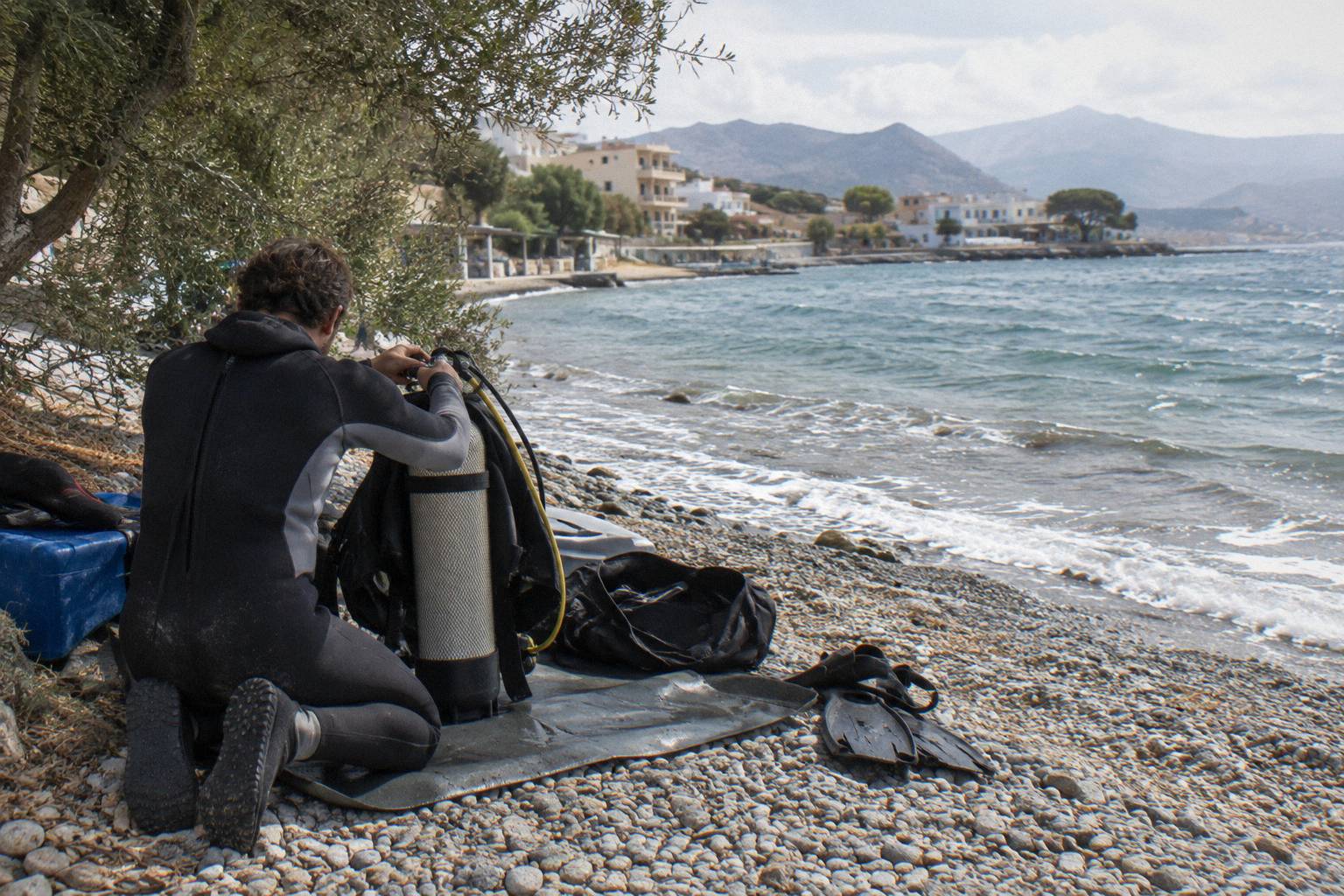
The distinction matters because the phrase "limited in depth" is the certificate's whole meaning. The trip itself is a real step up from a single try dive: five hours, two separate shore dives in Kalyves with depths of up to 12 meters, scuba equipment, digital learning materials on the SSI application, a snack, insurance, an air-conditioned vehicle, and photos and videos mentioned in the description. Swimsuit and towel are yours to bring.
For a reader deciding between one introductory dive and this, the useful framing is hours and dives, not credentials. The try dive asks an afternoon and gives one supervised experience; the Two Shore Dives trip asks five hours, two dives and some app-based learning, and gives a record of that. Families with a 10-year-old who has already done a try dive somewhere often land here, and the full SSI Basic Diver itinerary is broken out on its own page.
Every other beginner trip in the group stays firmly on the introduction side. The Horizon Diving Four-Hour Try Dive from Heraklion, from €99 per person, 5.0 from 119 reviews, from age 8, describes an entry-level program in shallow water for the whole family, with scuba equipment, a small snack and water, and fees and taxes included, and no dive count, depth or certificate claim anywhere in its entry. CRETANDIVERS in Agia Pelagia bay near Heraklion, from €70 per person, from age 8, includes hotel pick up and drop off, PADI instructors, scuba equipment, bottled water and an air-conditioned vehicle, with the photo and video session excluded. Salty Descents' beginner shore dive in Kalyves, from €105 per person, from age 8, gives a recognition card, photos and videos. Sailingcrete's trip, from €70 per person, 2 hours 30 minutes, says in its own words that it is not a certified scuba diving course. None of them certifies anyone, and none of them claims to.
| Trip | Minimum age | Underwater time or dives | Depth, where given |
|---|---|---|---|
| Omega Divers Chania Beginner Try Dive | 8 | One 45 minute dive | Up to 8 m; ages 8 to 10 to 2 m |
| Chania Diving Center Try Scuba With Photos | 8 | About 40 to 45 minutes | "9 to 10 meters" |
| Salty Descents Two Shore Dives, SSI Basic Diver | 10 | Two shore dives | Up to 12 m |
| Horizon Diving Four-Hour Try Dive | 8 | Ask the operator | Ask the operator |
| CRETANDIVERS Try Scuba, Agia Pelagia | 8 | Ask the operator | Ask the operator |
| Sailingcrete Try Dive, Heraklion | Ask the operator | Ask the operator | Ask the operator |
Each depth and age in that table belongs to that one trip. No agency standard age or depth applies across them, and merging any two rows would invent a figure nobody gives. The Salty Descents beginner trip in the same table's family, at 8 and up, goes no deeper than its own entry allows you to say, which is no depth at all.
What Trips People Up When Booking A Try Dive?
The three things that trip people up are the "certification" wordings taken as qualifications, the assumption that a recognition card lets you dive unsupervised somewhere, and the idea that a try dive obliges you toward a full course. A recognition card records one experience. A Basic Diver certificate is depth-limited and entry-level. A try dive commits you to nothing beyond the afternoon you booked.
The first trap is reading "Free Certification" as a free qualification. The word free is accurate, the card is genuinely free, but the thing it names is a record of one dive. Nobody on those trips leaves qualified, and nobody needs to be.
The second trap is expecting the card to travel. Try the phrase on yourself before you book: "I have an SSI Try Scuba Recognition Card." For flying afterwards, DAN recommends a minimum preflight surface interval of 12 hours after a single no-decompression dive, and 18 hours after multiple dives in a day or multiple days of diving, per its guidance at the DAN flying-after-diving page. Ask the operator when you book about the day's plan; no trip entry here sets a no-fly time. That detail is covered in full in how long to wait before flying after diving.
The third trap is the medical questionnaire. Before a PADI try dive, participants fill in a medical questionnaire; depending on the answers they may take part at once or may need a doctor's statement confirming they are fit to dive. Answer every question, and flag anything you are unsure about to the professional running your session.
One more thing worth knowing, because it explains why some wording is careful: Greek law protects what lies underwater. Under Law 4858/2021, underwater cultural heritage is under State protection and shipwrecks of vessels and aircraft more than 50 years old are designated as monuments, including the objects they contain, per the Ephorate of Underwater Antiquities. Divers look and do not touch. That rule is about wrecks and antiquities, not about try dives, but it is part of why operators here describe sites as visits rather than take-what-you-find expeditions.
So the practical summary is short. A try dive is a guided introduction, the recognition cards are records of it, the SSI Basic Diver is a depth-limited entry-level certificate, and no full course is bookable among the trips on Crete Scuba Diving. Book the afternoon for the afternoon: the photos, the water, and the first breath underwater are the product, and they are worth every euro without a certificate attached.
Common Questions About A Try Dive Versus A Certification
Does A Try Dive On Crete Count As A Scuba Certification?
No. A try dive is an introduction to scuba diving under supervision. The word "certification" on three Chania Diving Center trips names recognition cards and a snorkel record, not a diving qualification.
What Is The SSI Try Scuba Recognition Card?
SSI's introductory recognition for completing a Try Scuba dive. It is not a full certification.
Is The SSI Basic Diver Certification A Real Certification?
It is an entry-level certificate limited in depth, awarded after the Salty Descents Two Shore Dives trip. It is not Open Water and not Advanced, and no Open Water or Advanced course is bookable among the trips here.
Do I Need A Try Dive Before Taking A Course?
Nothing here books a course, so the question is about the future, and the answer is that no trip here obliges you toward one. Many people use a try dive to decide whether they enjoy diving at all.
Which Operators On Crete Give A Card After A Try Dive?
Chania Diving Center gives a free SSI Try Scuba Recognition Card on its try-dive and boat combination trips, and Salty Descents gives a recognition card after its beginner activity. Omega Divers, CRETANDIVERS, Horizon Diving and Sailingcrete describe introductory experiences without a certificate claim.