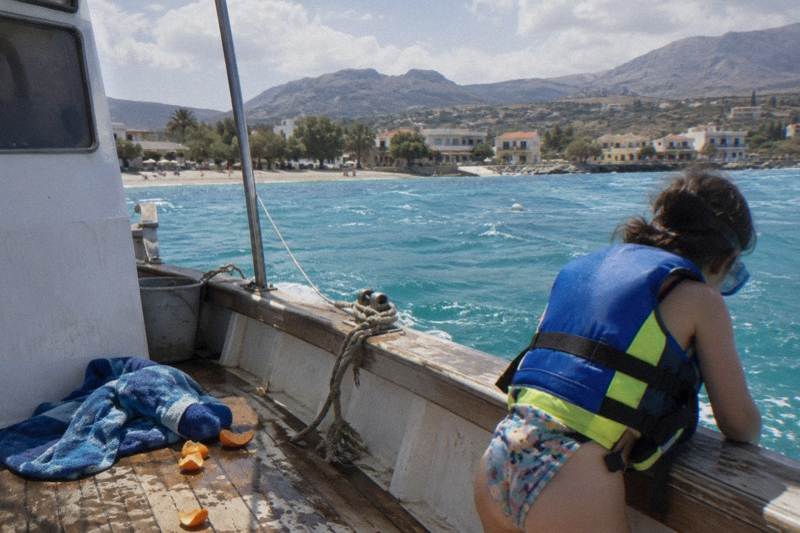
Do You Have To Be A Strong Swimmer To Try Scuba Diving On Crete?
Swimming ability on Crete try dives: which operators ask for it, what the medical questionnaire covers, and when a snorkel trip is the better first step.
No, and the trips here make that explicit in only one place. Chania Diving Center asks learners on its try dive to swim a little and not fear water, and no other try-dive entry sets a swimming requirement. What every beginner trip does ask is a medical questionnaire, and PADI says a doctor's statement may follow depending on the answers. A snorkel trip with flotation aids is the softer route for a genuinely nervous swimmer.
Scuba gear changes the arithmetic of swimming more than most first-timers expect. A buoyancy control device, a tank and a wetsuit all add buoyancy, and a regulator means you keep breathing normally underwater rather than holding your breath and fighting for the surface. That is why the industry-wide pattern on Crete is that try dives are built for people who have never dived, not for people who swim laps. The instructor stays beside you throughout, and the depth stays in beginner range: the Omega Divers try dive in the Chania region takes its dive to a maximum of 8 m, with children aged 8 to 10 limited to 2 m.
None of that makes swimming irrelevant. Comfort in water is a different thing from technique, and the two get confused constantly. A person who can float, put their face in the water and move slowly without panic is in a far better position for a first dive than a confident pool swimmer who has never been in the sea. The one operator here that puts a swim requirement in words, Chania Diving Center, frames it exactly that way: swim a little, and do not fear water.
The medical side deserves equal weight in the decision. PADI, whose Discover Scuba Diving format the Omega Divers trip follows, says participants complete a medical questionnaire and, depending on the answers, may need a doctor's statement confirming fitness to dive. Answer every question on the form accurately and flag anything relevant when you book, because a disclosed condition can be worked around while a hidden one cannot.
What Each Trip On Crete Actually Says About Swimming
Only one try dive names a swimming requirement: Chania Diving Center asks learners to swim a little and not fear water. Salty Descents offers flotation aids for less confident swimmers on its snorkel trip, the Kourtaliotiko gorge trip runs at everyone's own level, and the Omega Divers Souda Bay trip adds stand up paddling and optional sea scooters for ages 12 and over. No entry sets a formal swim test.
That last point matters because people arrive expecting one. A swim test, meaning a timed distance or a tread-water requirement, appears nowhere in the trip entries here. What appears instead are softer signals of who each trip suits. Chania Diving Center's try dive names its two conditions plainly. The Omega Divers try dive pairs one instructor with every two adults, and one instructor per child, which is the ratio doing the work a swim test would otherwise do. Horizon Diving calls its Heraklion-area session an entry-level program pitched at the whole family, with scuba equipment, a small snack and water, fees and taxes all in, from €99 per person, minimum age 8.
| Trip | Swimming requirement | Notes for nervous swimmers |
|---|---|---|
| Try Dive With Photos, Chania Diving Center, from €120 | Swim a little, do not fear water | Free underwater photos, insurance included, minimum age 8 |
| Chania Beginner Try Dive, Omega Divers, from €120 | Ask the operator | One instructor per two adults, one per child, minimum age 8 |
| Four-Hour Try Dive, Horizon Diving, from €99 | Ask the operator | Entry-level program, whole family, minimum age 8 |
| Beginner Shore Dive, Salty Descents, from €105 | Ask the operator | Small groups, instructor guidance, minimum age 8 |
| Six-Hour Intro Dive, CRETANDIVERS, from €70 | Ask the operator | Hotel pick up and drop off included, minimum age 8 |
| Two-and-a-Half-Hour Try Dive, Sailingcrete, from €70 | Reasonable physical condition | Ask the operator |
| Guided Snorkel Boat Trip, Chania Diving Center, from €95 | Ask the operator | Minimum age 6, 4.7 from 294 reviews |
| Salty Descents Snorkel Trip, from €80 | Flotation aids for less confident swimmers | Minimum age 5, 4.9 from 61 reviews |
The table reads as a spread rather than a ranking, and that is deliberate. Three of the try dives carry no swim wording at all, which means the right question at booking time is a plain one: tell the operator how you feel in water and let them place you. Every trip with cancellation data here carries free cancellation up to 24 hours before the start, so an early booking is not a trap if the answer comes back that a snorkel trip fits better.
The Chania Diving Center try dive is the natural first booking for a cautious swimmer who still wants to dive, because it is the one trip that states its expectations openly. It runs from €120 per person, holds a 4.8 rating from 54 reviews, and includes full gear, snacks, fees, an air-conditioned vehicle and diving insurance, with free underwater photos as part of the package. Its title says "Free Certification", and the trip's own description explains that as a free SSI Try Scuba Recognition Card, which records the dive but does not certify anyone as a diver. You can see the full details and book the Try Dive With Photos on its trip page, or check availability for your dates.
Snorkel Trip First, Or Go Straight To A Try Dive?
A slow but calm swimmer can go straight to a try dive, and the Salty Descents Beginner Shore Dive from €105, the Horizon Diving Four-Hour Try Dive from €99 and the Try Dive With Photos from €120 all fit. A swimmer who panics in deep water or cannot float should start with a snorkel trip with flotation aids, and the Salty Descents snorkel trip at €80 with 4.9 from 61 reviews is built for that.
The two formats differ in where the confidence is needed. A try dive asks you to breathe underwater through a regulator while an instructor stays within arm's reach, and the depth stays shallow, with the Omega Divers dive capped at 8 m and young children at 2 m. A snorkel trip asks you to float at the surface and look down, with a wetsuit or vest adding buoyancy. Neither requires technique, but the try dive requires that you can keep breathing calmly while your face is under, which is a psychological hurdle more than a swimming one.
| Question | Points to a try dive | Points to a snorkel trip |
|---|---|---|
| Can you float calmly for a minute? | Yes, without gripping anything | No, or only while holding the edge |
| Face in the water? | Comfortable with a mask on | Prefers to keep the head up |
| Depth feeling | Curious about what is below | Uneasy below surface level |
| Breathing underwater | Willing to try with an instructor nearby | Would rather breathe freely at the surface |
| Group split | Everyone wants to dive | Mixed group, some hesitant |
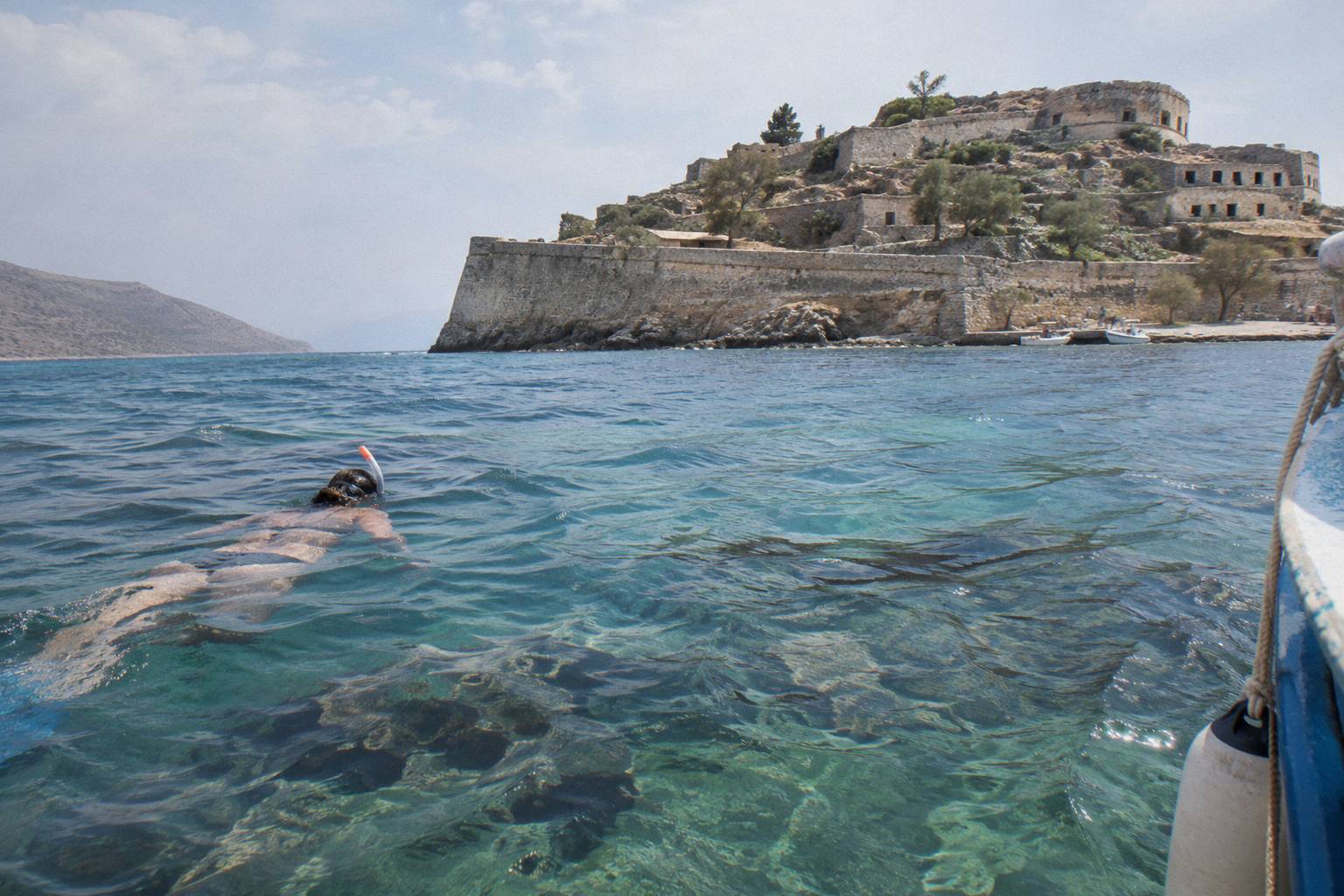
The Salty Descents shore-based try dive in Kalyves suits the middle case well. It runs three hours from €105 per person, minimum age 8, with instructor guidance through theory, practice and skills in small groups, full scuba equipment, insurance, bottled water and fresh fruit or a light snack, plus an air-conditioned vehicle and photos, videos and a recognition card after the activity. Snorkelling trips from the same operator come with flotation aids for less confident swimmers, so a family with one hesitant member can split the day: one books the try dive, one books the snorkel trip, both leave from the same Chania or Kalyves pickup area.
A useful bridge question for anyone unsure: can you float on your back in a pool for a minute without stress? If yes, the try dive is realistic. If the answer involves gripping the edge, start with snorkelling and take the try dive another season. Two related questions come up at this exact decision point, and both are answered elsewhere in depth: how deep a try dive actually goes and whether you can dive without any certification at all. On the second point, the short answer is yes, a try dive is exactly that, an introduction rather than a course, and Sailingcrete's own wording for its Heraklion-area trip calls it "not a certified scuba diving course".
The Medical Questionnaire: What Gets Asked And Why It Matters
PADI says try dive participants complete a medical questionnaire, and depending on the answers, may need a doctor's statement confirming fitness to dive. That applies to PADI-format experiences such as the Omega Divers try dive. None of the trip entries here states its own medical form, so for any other trip the practical rule is the same: tell the operator when you book.
The questionnaire is standard across the diving world and exists for a narrow reason: diving changes pressure on the body, and some medical histories interact with that. The form asks a series of yes or no questions, and a yes does not automatically end the booking. It triggers the doctor's statement route, which can be a quick visit before travel rather than a lost holiday. Travellers who already know they will answer yes to something can arrange that statement at home, where their own doctor knows their history.
No list of specific conditions belongs here, because the trips do not publish one and guessing at medicine serves nobody. The same applies to remedies: no cold advice, no ear advice, no clearance shortcuts. The genuine guidance is process, not diagnosis. Disclose, get the statement if the form calls for one, and let the operator's instructor make the call on the day. Chania Diving Center's try dive also gives every guest full diving insurance as part of the package, which is worth knowing when comparing trips.
The age minimums are separate from the medical gate and worth a look while booking, since they vary by trip: 8 for the Horizon Diving, Omega Divers, Chania Diving Center, CRETANDIVERS and Salty Descents try dives, 10 for the Salty Descents Two Shore Dives SSI Basic Diver trip, and 12 for the Kefi Divers night dive and the Chania Diving Center Elephant Cave trip. The full picture is in how old you have to be to try scuba diving.
Flotation Aids, Wetsuits And Gear That Help A Weak Swimmer
Gear does a lot of quiet work for weak swimmers. The Salty Descents snorkel trip offers flotation aids for less confident swimmers, the Kourtaliotiko gorge trip fits everyone with a full-body wetsuit at their own level, and the Omega Divers Souda Bay trip adds stand up paddling with safety gear, plus optional sea scooters for ages 12 and over. On every try dive here, the buoyancy control device and tank keep you floating.
Buoyancy is the part beginners consistently underestimate. A wetsuit traps a layer of water that warms to body temperature and adds float, a BCD is an inflatable jacket the instructor can adjust, and a tank on your back changes your balance rather than your weight in water. The practical result is that a person who struggles to stay up in a swimming costume floats easily in full scuba gear. That is why the swim requirement conversation is about comfort, not speed.
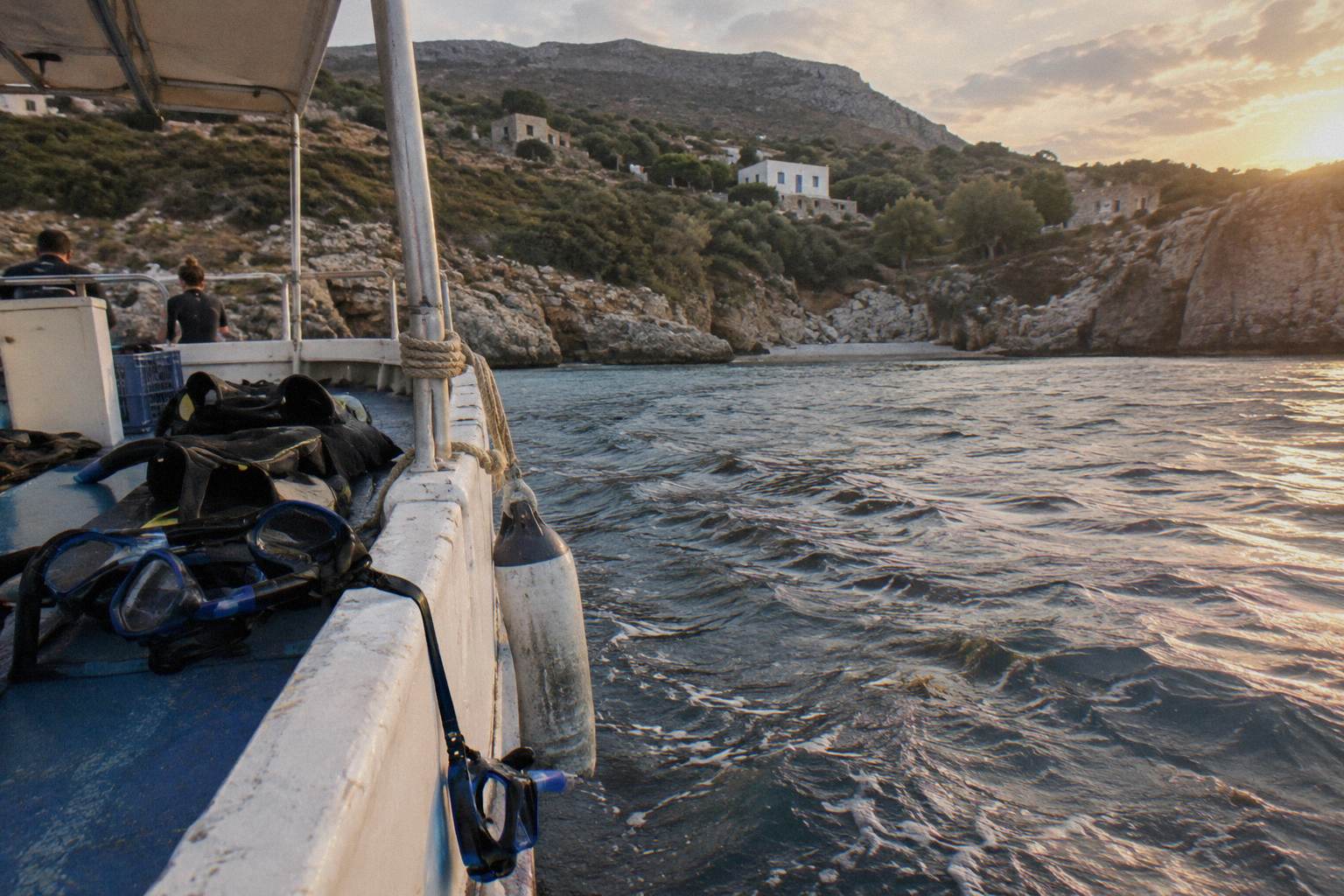
Free cancellation runs up to 24 hours before the start, with a weather condition applying. It suits a mixed group where confidence levels vary, since the whole-family framing means nobody is singled out as the weak swimmer.
One caution on gear: it supports confidence, it does not create it. If the underlying feeling is fear of water rather than lack of technique, the right first move is the surface, not the seabed. The snorkelling trips by boat or shore comparison lays out the options, and several of them, including the Souda Bay trip with its optional sea scooters, keep a nervous swimmer engaged at the surface with a guide close by.
What Trips People Up When Booking A Try Dive?
Three things trip people up: assuming a swim test exists when no entry here states one, assuming the word certification in a product title means a qualification when each one is a recognition card or entry-level certificate, and forgetting the flying rule, which DAN puts at a minimum 12-hour preflight surface interval after a single no-decompression dive and 18 hours after multiple dives or days of diving. Each is avoidable at booking time.
The swim-test assumption makes people book a snorkel trip they did not want, or cancel a try dive they would have loved. The fix is one sentence to the operator at booking: describe your swimming in plain terms, and ask them to confirm the trip fits. The strong-swimmer question is answered by placement, and every operator here places beginners daily.
The certification wording needs decoding once and then it is harmless. Three titles use the word: "Free Certification" on the Chania Diving Center Try Scuba With Photos, "Scuba Diving Certification" on the Chania snorkel-and-first-dive boat trip, and "Snorkeling Diver Certification" on the Chania guided snorkel boat trip. The first describes a free SSI Try Scuba Recognition Card, which does not certify anyone as a diver, and the others are the operator's own wording for a snorkel record and a try dive record. The Salty Descents Two Shore Dives trip lists an "SSI Basic Diver Certification", which is an entry-level certificate limited in depth, and not an Open Water or Advanced qualification; no Open Water or Advanced course is among the trips here. A try dive is an introduction, full stop, and whether a try dive counts as certification is worth a read before the word pulls you off course.
The flying rule catches people who dive on their last morning and board a plane that evening. DAN, the Divers Alert Network, recommends a minimum 12-hour preflight surface interval after a single no-decompression dive and 18 hours after multiple dives or multiple days of diving. No trip entry here states its own no-fly time, so ask the operator when you book, and schedule the dive early in your stay rather than at the end. For the same reason, answer the medical questionnaire fully: it is the one document on the booking path that protects you specifically.
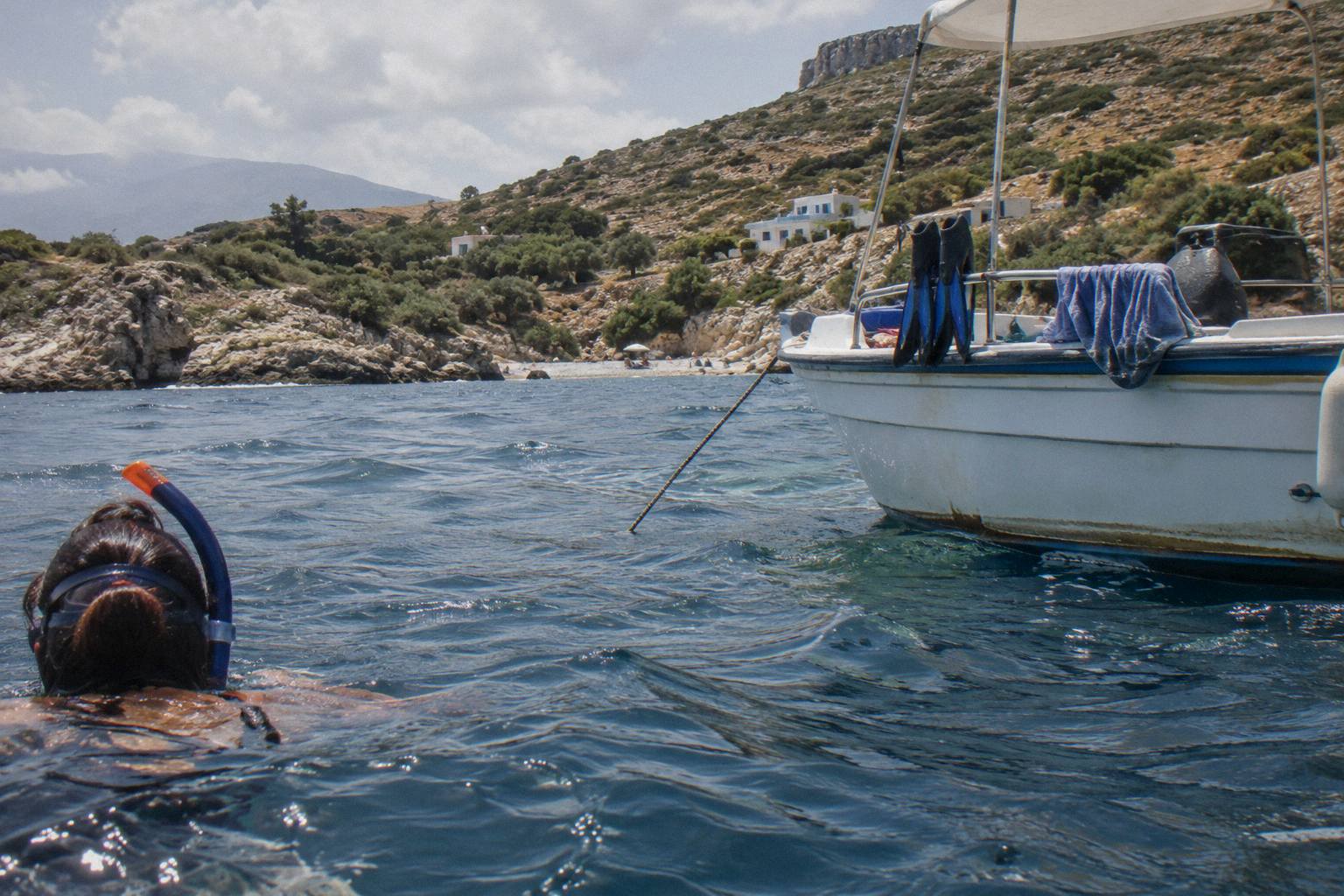
For a genuinely hesitant swimmer, the day to aim for looks like this: a morning snorkel trip with flotation aids to prove the sea is manageable, then a try dive on a later holiday once the panic has gone. For a slow but calm swimmer, book the try dive now, tell the operator how you swim, answer the medical form in full, and leave a day before flying. The Crete Scuba Diving trip pages carry the per-trip details for every option above, and the trio below covers the three beginner trips a first-time diver is most likely to compare.
Common Questions About Swimming And Try Dives On Crete
Do You Have To Be A Strong Swimmer To Try Scuba Diving On Crete?
No. The only swimming wording in the trips here is Chania Diving Center's ask that learners swim a little and not fear water. No entry sets a swim test. Comfort in water matters more than technique, and the instructor stays beside you throughout the dive.
What Happens If I Answer Yes On The Medical Questionnaire?
PADI says participants in its try dive experiences complete a medical questionnaire and, depending on the answers, may need a doctor's statement confirming fitness to dive. A yes answer sends you down that route, which can be a quick doctor's visit, not a lost booking. Answer every question on the form fully and tell the operator when you book.
Is Snorkelling Easier Than A Try Dive For A Weak Swimmer?
Usually yes, because you stay at the surface with a wetsuit or flotation aid adding buoyancy. The Salty Descents snorkel trip from €80 offers flotation aids for less confident swimmers, minimum age 5, and the Omega Divers Souda Bay trip from €99 adds stand up paddling and optional sea scooters for ages 12 and over.
Does A Try Dive Certify Me As A Diver?
No. A try dive is an introduction. The Chania Diving Center title "Free Certification" describes a free SSI Try Scuba Recognition Card, which does not certify anyone, and the Salty Descents "SSI Basic Diver Certification" is an entry-level certificate limited in depth, not an Open Water qualification. No Open Water or Advanced course is among the trips here.
Can Children Who Are Not Strong Swimmers Do A Try Dive?
Children aged 8 to 10 on the Omega Divers try dive dive to a maximum of 2 m with one instructor per child, and the minimum age across most try dives here is 8. Tell the operator how your child is in water when you book, and the snorkel trips with minimum ages of 5 or 6 are the fallback.