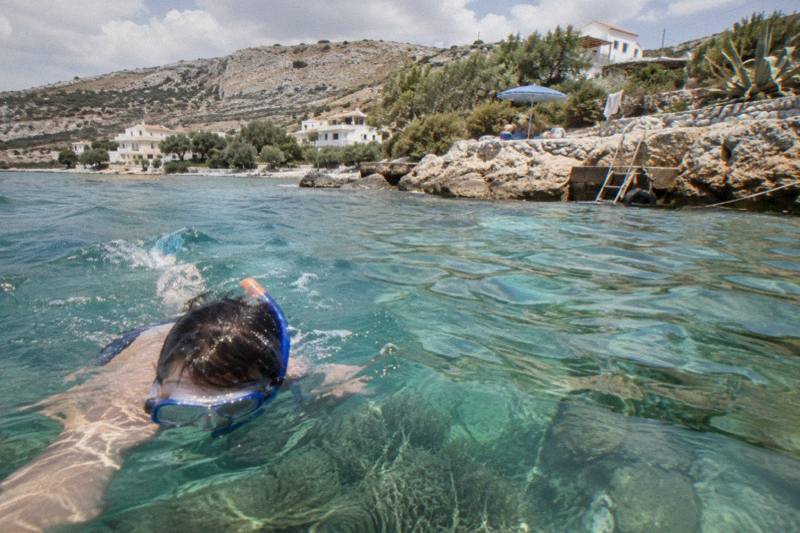
How Long Should You Wait To Fly After Scuba Diving On Crete?
DAN's 12 and 18 hour preflight surface intervals explained for Crete dive days, which island trips are one dive and which are two, and how to plan a dive near your flight home.
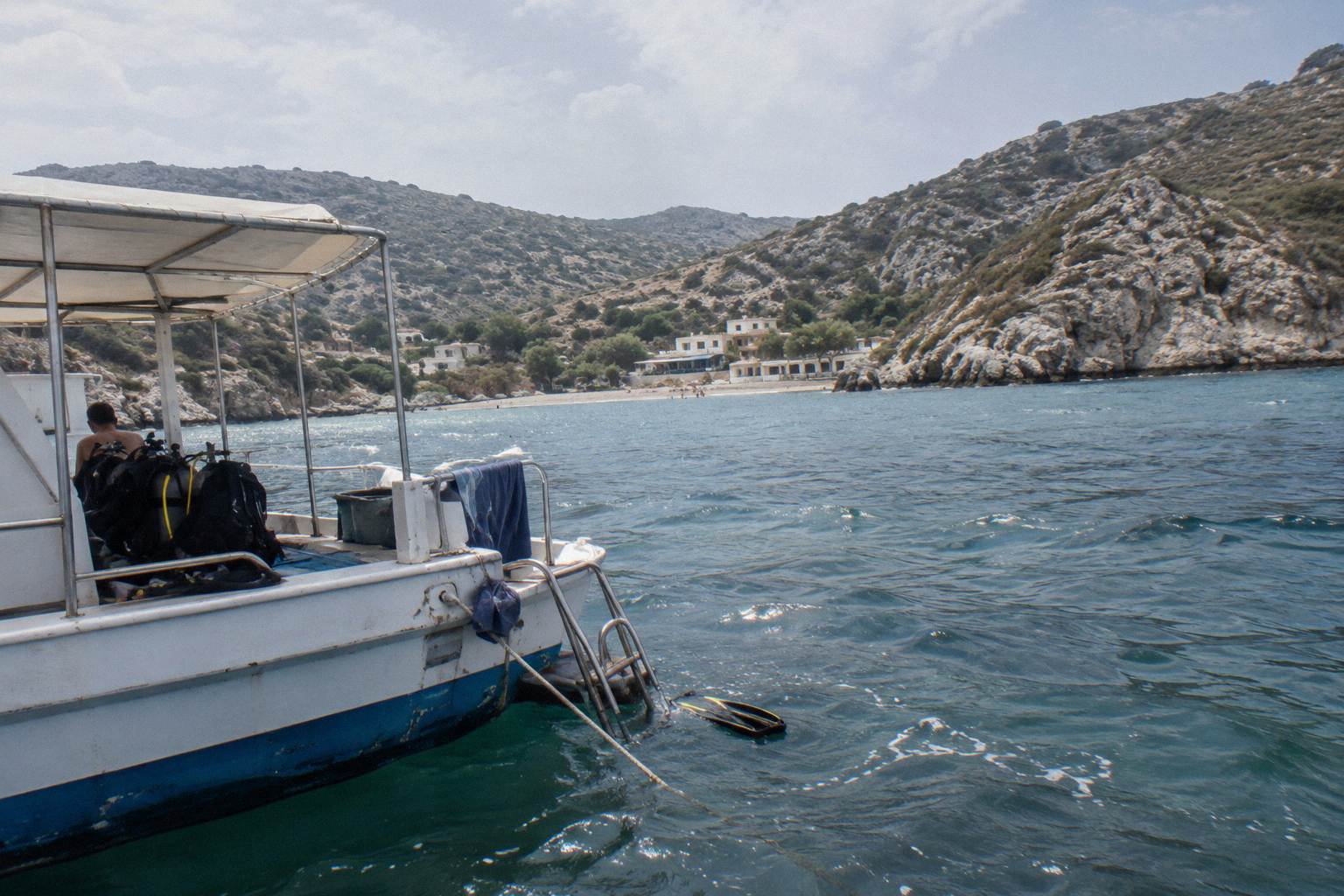
For a single no-decompression dive, Divers Alert Network (DAN) recommends a minimum preflight surface interval of 12 hours. For multiple dives in a day or multiple days of diving, the minimum recommended interval is 18 hours. After decompression dives, DAN says little evidence exists and an interval substantially longer than 18 hours appears prudent. No trip around Crete states its own no-fly time, so ask the operator when you book.
The holidaymaker planning a dive day near the flight home is the exact situation these numbers exist for. A morning dive followed by an evening departure is the risky pattern, and the numbers above are the line Divers Alert Network, the diving safety research body, draws against it. The full guidance sits on DAN's flying after diving page, and every interval below comes from there and nowhere else.
Casting the numbers against the trips on the island is straightforward. Almost every try dive here is a single dive in shallow water, which puts it in the 12 hour bracket. The two-dive days for certified divers, and any holiday where you dive on consecutive days, sit in the 18 hour bracket. Snorkelling trips are not scuba dives and are not covered by these intervals at all, though the gorge trip near Plakias involves swimming and climbing and deserves its own planning anyway.
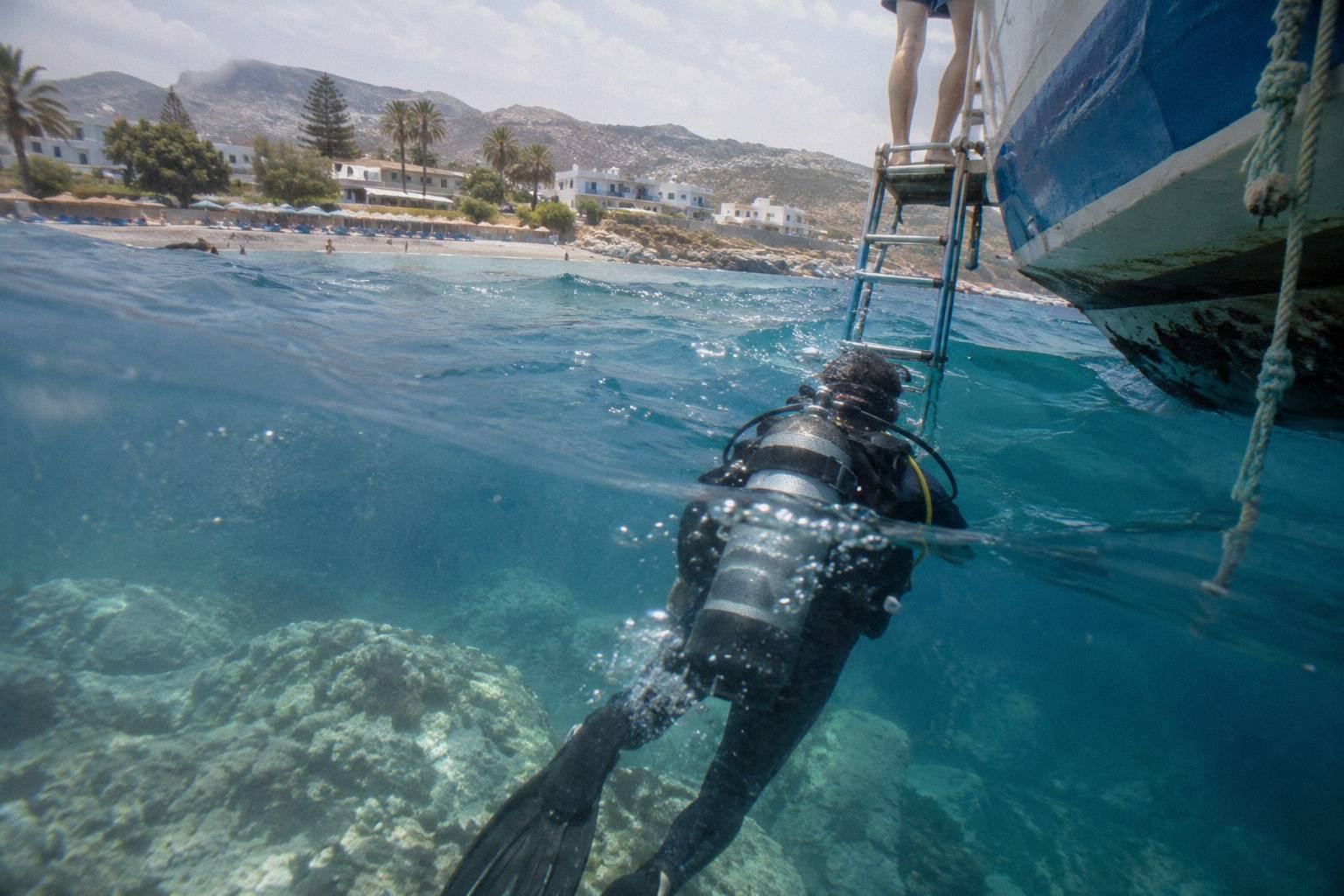
Here are the trips that fit the tightest version of that schedule, from a single shallow try dive to a full two-dive day for certified divers.
Why Waiting Before Flying Matters At All
Nitrogen absorbed under pressure comes out of solution as cabin pressure drops, and a plane cabin sits at roughly the equivalent of a modest mountain altitude. The surface interval gives the body time to offgas the extra nitrogen so bubbles cannot form in tissues during ascent. DAN frames the intervals as minimums, which is the word to take seriously: a minimum is a floor, not a target to aim the flight schedule at.
The mechanism is worth one plain paragraph because it explains why the interval scales with the number of dives rather than with how deep a single dive felt. One dive loads a certain amount of nitrogen. Two dives in a day load more, and the second begins before the first is fully cleared. Several days of diving build a background load that takes longer to shed. That stacking, not any single dive, is why DAN's guidance jumps from 12 hours to 18 hours once repetition enters the picture.
The guidelines are stated as general recommendations rather than medical advice for an individual. Health history, age and how a body responds to pressure vary, and DAN's own page is framed around population research, not a diagnosis for one person. A diver with a medical question should raise it with the operator before the booking and with a doctor if anything on the medical form is uncertain. That form is a real part of the day: the medical questionnaire a first dive asks is covered in what a dive medical form asks on Crete.
One point of housekeeping: none of the trips covered here promises a weather refund or a reschedule in the same breath as the no-fly question, and the two subjects are separate. The cancellation picture is covered in whether weather cancels dive trips on Crete, and it matters for flight-day planning in a different way: a trip scrubbed by weather the day before departure can free a day you had already counted as a surface interval.
Which Trips Are One Dive, And Which Count As Multiple?
Every try dive around Crete is a single dive: Horizon Diving's four-hour program, Omega Divers' PADI Discover Scuba Diving, the Chania Diving Center try dive, CRETANDIVERS at Agia Pelagia, Sailingcrete and Salty Descents each put you underwater once. The two-dive trips are for certified divers: Elephant Cave And Minnewaska, Omega Certified Boat Dives, Kefi Certified Boat Dives, and the Salty Descents two shore dives.
The distinction drives the whole schedule. A single shallow dive falls under DAN's 12 hour minimum; a two-dive day falls under the 18 hour minimum, even when both dives are shallow, because the count is what changes the bracket. Here is the mapping trip by trip.
| Trip | Dives | Preflight Interval Bracket |
|---|---|---|
| Four-Hour Try Dive, Horizon Diving | one try dive | 12 hour minimum, single dive |
| Chania Beginner Try Dive, Omega Divers | one dive, up to 8 m | 12 hour minimum, single dive |
| Try Dive With Photos, Chania Diving Center | one dive, about 40 to 45 minutes | 12 hour minimum, single dive |
| Six-Hour Intro Dive, CRETANDIVERS | one shore dive | 12 hour minimum, single dive |
| Two-and-a-Half-Hour Try Dive, Sailingcrete | one dive | 12 hour minimum, single dive |
| Beginner Shore Dive, Salty Descents | one try dive | 12 hour minimum, single dive |
| Two Shore Dives, Salty Descents | two dives, up to 12 m | 18 hour minimum, multiple dives |
| Elephant Cave Two-Dive Day | two different dives | 18 hour minimum, multiple dives |
| Omega Certified Boat Dives | 2 dives with a break | 18 hour minimum, multiple dives |
| Kefi Certified Boat Dives | two guided boat dives | 18 hour minimum, multiple dives |
The try dives are the ones holidaymakers most often squeeze near a departure, and the single-dive bracket is why that can work: a dive that finishes in the morning leaves a workable margin for an evening flight, and a dive the afternoon before leaves a generous one. The two-dive days are the ones to place earlier in the week.
The Try Dive With Photos trip from Chania Diving Center is the clearest single-dive example: about 30 minutes of theory, about 40 to 45 minutes underwater, from €120 per person, 4.8 from 54 reviews, minimum age 8, free cancellation up to 24 hours before the start. The base sits at Agios Onoufrios near Kounoupidiana, with an information office near the Old Harbour in Chania town. The title's "Free Certification" wording is the operator's name for a free SSI Try Scuba Recognition Card, a record of the dive rather than a diving certificate. The trip appears in full in the guide to trying scuba at Chania, Kalyves and Almyrida, and you can check the try dive trip's availability alongside Try Dive With Photos on the operator's page if the flight-day timing is the deciding factor.
For the two-dive side of the table, the certified options are laid out in the boat dives for certified divers from Chania. The refresher dive from Kefi Divers is one dive, but it is a skills session plus a dive, so treating it as a single-dive day with a 12 hour minimum is the reasonable reading, and confirming with the operator on the morning settles it.
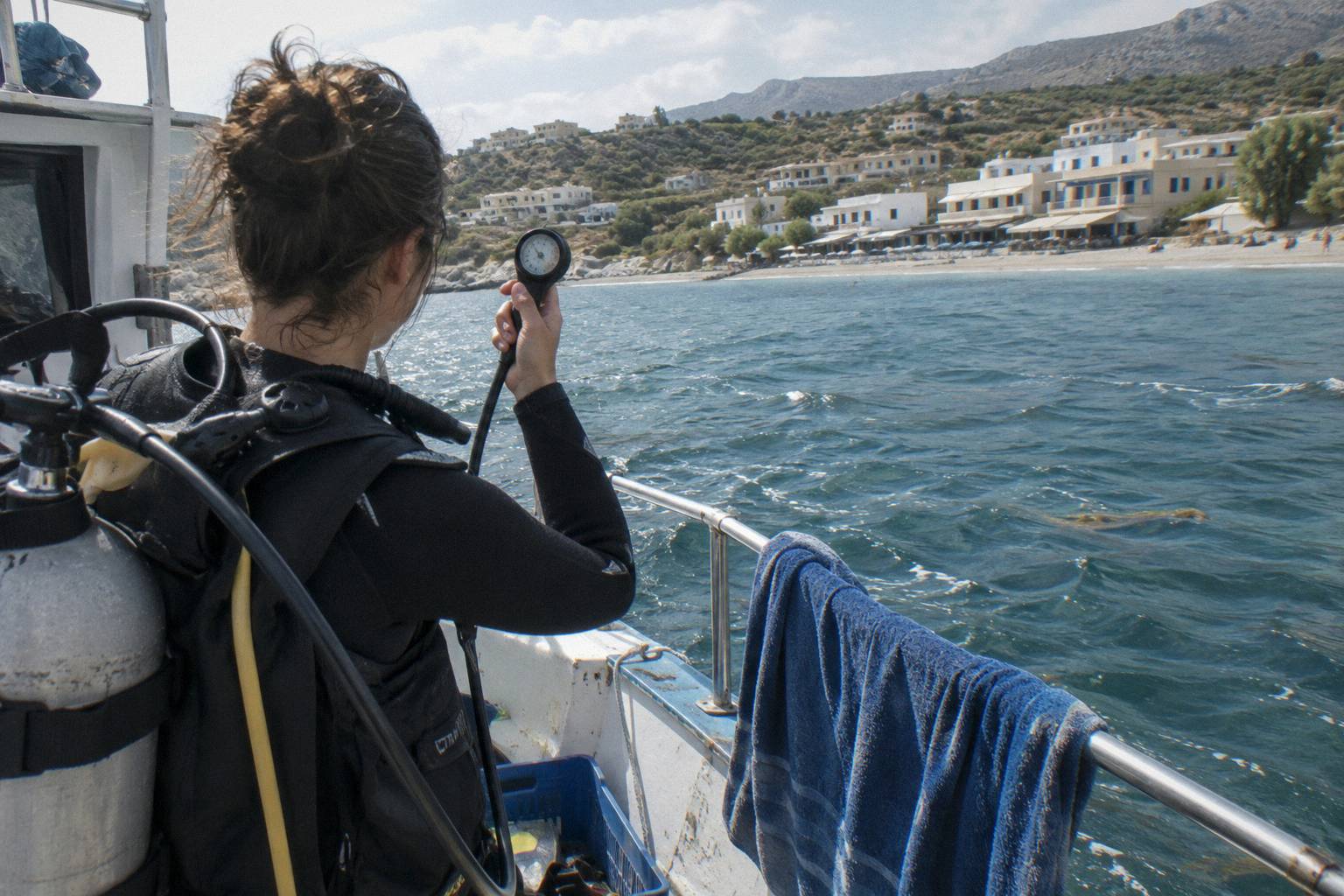
Do You Really Need To Count Two Shallow Dives As A Multiple-Dive Day?
Yes. DAN's 18 hour minimum applies to multiple dives in a day regardless of how modest each dive is, and the two-dive trips around Crete are described in exactly those terms: two dives with a break. Depth shapes the nitrogen load of each individual dive, but the repetition is what moves the surface interval from 12 to 18 hours, and shallow twice is still twice.
A common holiday pattern makes the point. A traveller books the Salty Descents two shore dive trip in the morning and a try dive for a family member the next day, then flies on day three. Day one is a two-dive day. Day two is a single dive, but it is also a second day of diving, and DAN's wording covers multiple days of diving in the same 18 hour bracket as multiple dives in a day. The safe reading of the schedule is that anything beyond one lone dive, once, in the whole holiday, sits at 18 hours.
The single-day, single-dive traveller has more room. One try dive on the last full day, followed by a flight the following evening, clears the 12 hour minimum with hours to spare. A morning try dive and an afternoon flight the same day clears it only if the dive is genuinely early and the departure genuinely late; that is a margin to check on paper, dive end time against boarding time, before the booking rather than after.
The one grey zone worth naming: the snorkel-and-first-scuba combined trip from Chania Diving Center is one scuba dive plus snorkelling at two boat stops. Snorkelling is surface swimming and does not add to the scuba load, so the trip sits in the 12 hour bracket as a single dive. The combined format is described in the snorkel and scuba boat combination trips guide.
Where The Dive Sites Sit, And Why That Rarely Changes The Interval
The interval depends on the dive profile and the count, not on geography: a single shallow dive off Gouves or in Agia Pelagia bay carries the same 12 hour minimum as one off Almyrida, and a two-dive day near Marathi carries the same 18 hour minimum as one in Souda Bay. Location only matters to the schedule through travel time between base and airport, and the bases sit on both coasts.
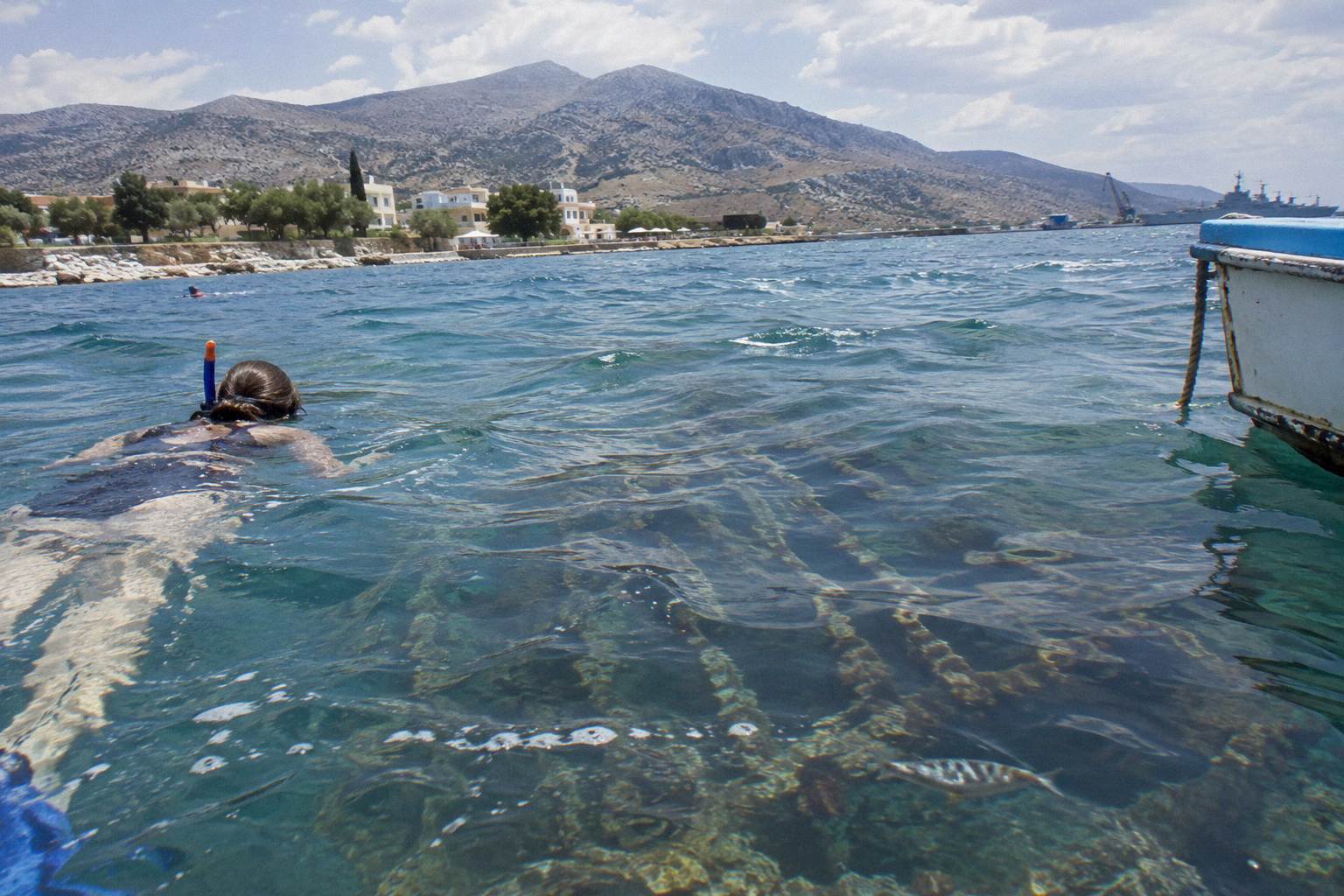
On the Chania side, Chania Diving Center works from Agios Onoufrios with boats going to Kalathas Bay, Souda Bay, Agios Onoufrios and Marathi; Omega Divers covers the Chania region with Souda Bay on its snorkel trip; Kefi Divers runs shore dives from Almyrida, usually Koutalas bay; Salty Descents works from Chania or Kalyves. On the Heraklion side, Horizon Diving runs private cruises from the port of Gouves, CRETANDIVERS dives in Agia Pelagia bay, and Sailingcrete covers the Heraklion area. Dive2gether Crete sits at Plakias on the Rethymno south coast, and Blue Dolphin Diving Center at Elounda.
The two main airports are Heraklion (HER) and Chania (CHQ). Which base pairs with which airport is a transfer-time question rather than a diving-safety question, and the Heraklion-area trips are laid out in the guide to diving around Heraklion, Agia Pelagia and Gouves.
One site adds a planning wrinkle worth a clause: the certified two-dive day from Chania Diving Center names the Elephant Cave and the SS Minnewaska wreck. The Minnewaska, a British troopship built in Belfast, sank on 29 November 1916 after hitting a mine near Marathi, and the Omega Divers certified trip puts it at about 20 m. Wrecks in Greek waters are protected: under Law 4858/2021, shipwrecks of vessels more than 50 years old from the date of sinking, including the movable objects they contain, are designated as monuments under State protection. Divers look and do not touch, as the Ephorate of Underwater Antiquities, established in 1976 as a Ministry of Culture regional service with jurisdiction over coastal and submerged antiquities throughout Greece, makes clear. The full site picture is in the guide to dive sites and marine life around Crete.
The Elephant Cave And Minnewaska day is a 5 hour trip, from €160 per person, minimum age 12, certified divers only with a valid certification card and the operator's checks, free cancellation up to 24 hours before the start. Full rental equipment except computers, guided dives with divemasters and instructors, snacks and insurance are included; towels and swimwear are not.
Does A Try Dive Count Differently From A Certified Dive?
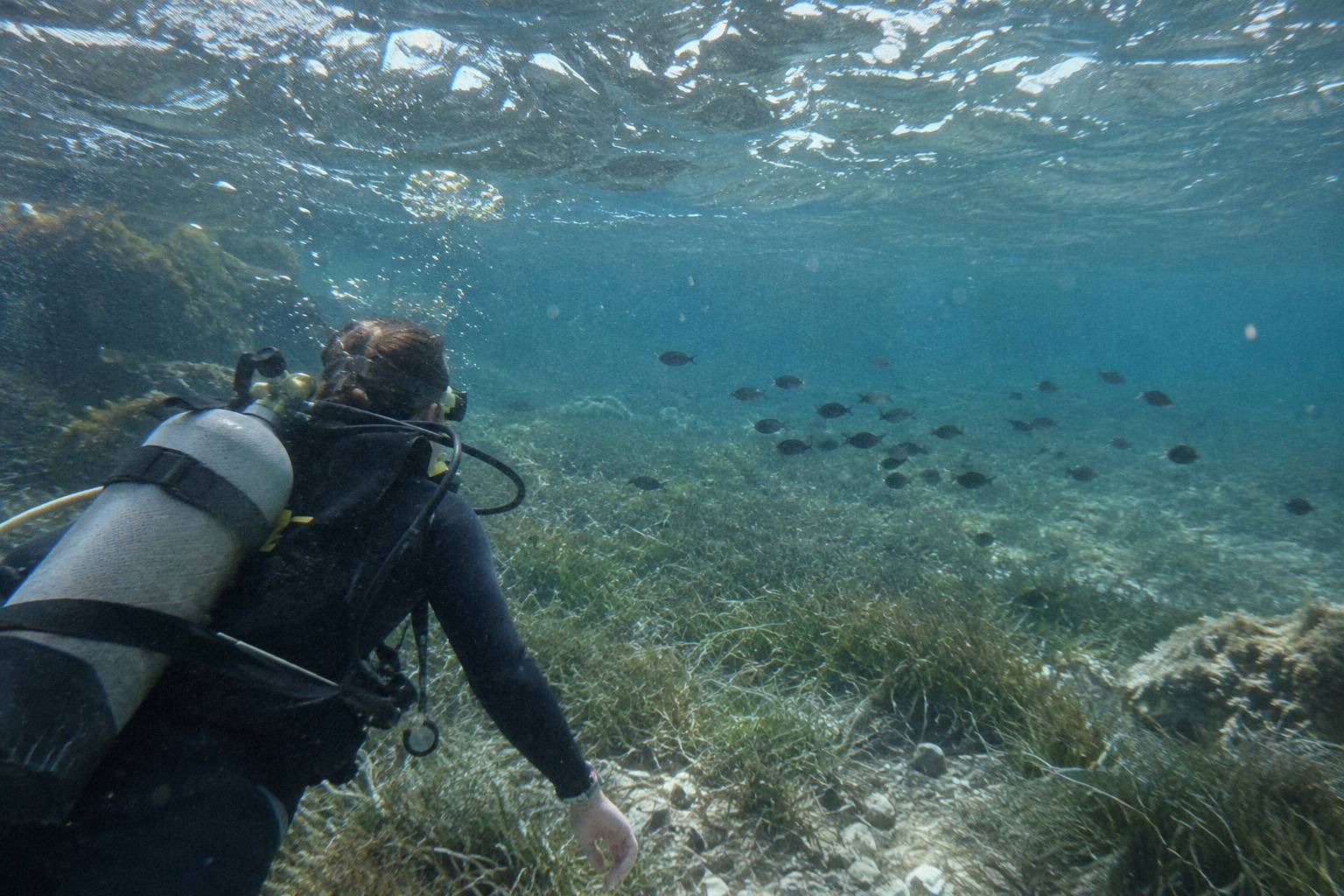
For the interval question, no: DAN's guidance is framed in dives and days, not in qualifications, so one shallow try dive is one single dive and falls under the 12 hour minimum. A try dive is an introduction, never a certification, but its shallowness is already priced into the single-dive bracket rather than granting it an exemption from it.
The try dive products around Crete describe themselves plainly. Omega Divers calls its Chania trip a "PADI Discover Scuba Diving" experience with a PADI professional guide: about 25 minutes of theory, then an actual 45 minute dive of up to 8 m, with children aged 8 to 10 reaching a maximum of 2 m, one instructor per 2 adults and one per child. Horizon Diving calls its Heraklion program an "entry-level program" for the whole family. Sailingcrete's own wording is "not a certified scuba diving course". The question of what a try dive actually is, and is not, is unpacked in does a try dive count as a scuba certification.
The 8 m and 2 m figures on the Omega trip are among the few depth numbers any entry gives. Chania Diving Center's try dive describes about 40 to 45 minutes underwater at a maximum depth of 9 to 10 meters, and the Salty Descents two-dive trip describes two shore dives reaching depths of up to 12 meters. None of that changes the bracket logic: depths inform the dive itself, the count sets the interval.
One product line needs care in wording. The Salty Descents two shore dive trip lists an "SSI Basic Diver Certification", an entry-level limited-depth certificate: not Open Water, not Advanced, and not a step towards booking one on this island, because no Open Water or Advanced course is among the trips covered here. What it is for the flight question is a two-dive day, which places it in the 18 hour bracket. The trip is covered in full in the SSI Basic Diver two shore dives guide.
What About Snorkel Trips Before A Flight?
Snorkelling is surface swimming, and DAN's preflight intervals are guidance for scuba diving, so a snorkel trip the day of a flight is not the same calculation. The island's snorkel trips, from the guided boat trip out of Chania to the sunken city at Elounda, involve no pressurized breathing and no nitrogen load, which is why they fill the pre-flight day for non-diving family members.
The snorkel fleet is large. The guided snorkelling boat trip from Chania Diving Center runs 4 hours, from €95 per person, minimum age 6, 4.7 from 294 reviews, with snorkelling gear, a divemaster guide, a captain, a light snack and water. The Omega Divers Souda Bay trip adds stand up paddling, from €99 per person, minimum age 5, 4.6 from 143 reviews. The Salty Descents snorkel boat trip runs from €80 per person, minimum age 5, 4.9 from 61 reviews. The budget fare at Elounda, snorkelling the sunken city of Olous with a slide presentation first, runs from €55 per person, 2 hours 30 minutes, minimum age 8, 4.7 from 37 reviews. The selection is compared in the guide to snorkelling trips on Crete by boat or from shore.
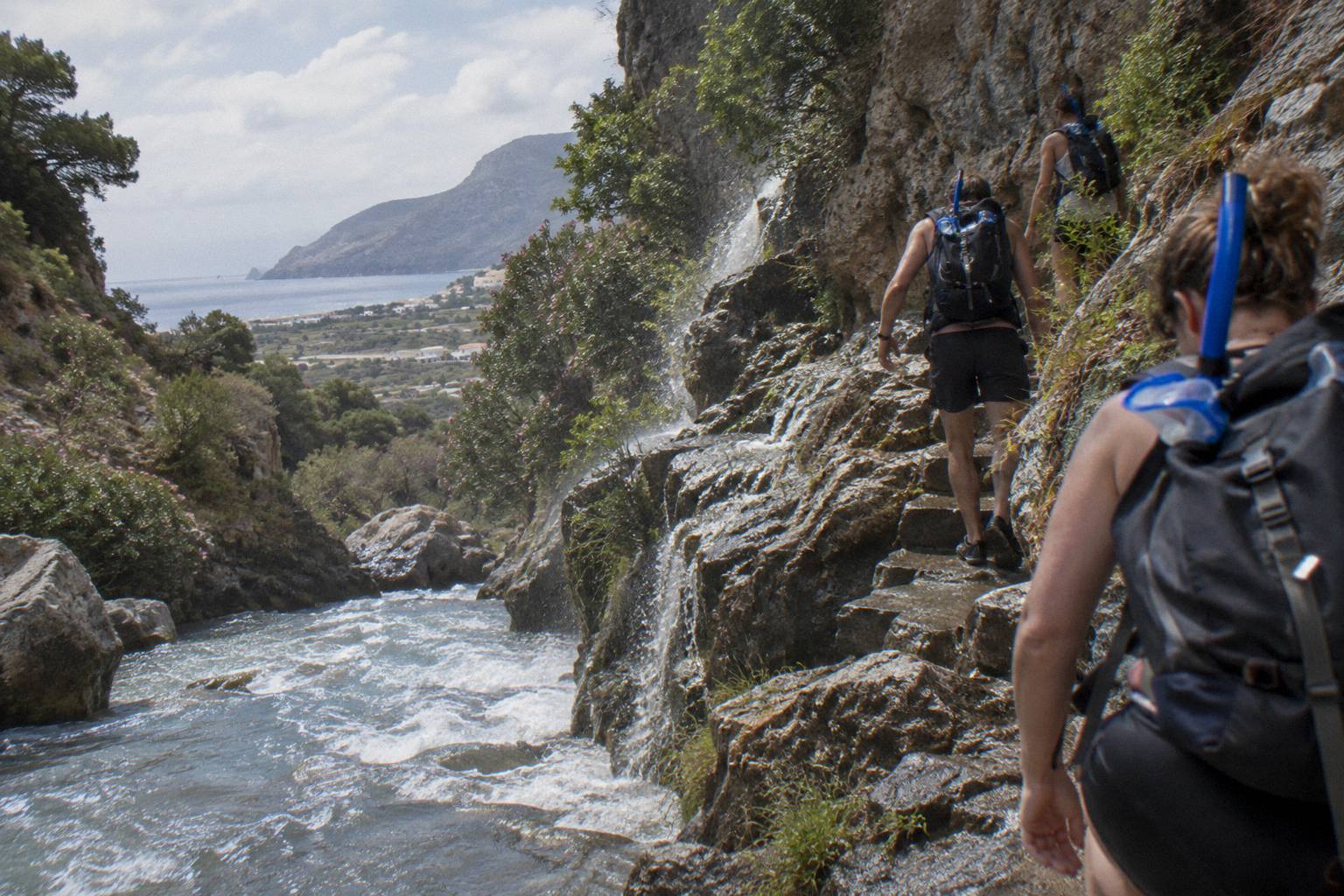
Two footnotes. The gorge waterfall trip near Plakias is a walk, easy climbing, swimming and snorkelling in a freshwater gorge and lagoon, never a sea trip, and the physical effort on a flight day is the traveller's own call. And the inclusion called "Snorkeling Diver Certification" on the Chania guided snorkel trip is the operator's own wording for a snorkel record, not a diving certificate; it has no bearing on any interval either way.
The private RIB charter from Horizon Diving is a snorkel-only craft too: a 9 m RIB named ANAX taking up to 7 people, 5 hours, from €550 per group, cruising from Gouves port with snorkelling gear, a snack and water, and an underwater GoPro at €30 extra. Full detail sits in the private boat snorkelling trip from Heraklion guide.
What Trips People Up When Booking A Dive Near Departure Day?
The recurring mistakes are fitting a two-dive day next to a flight, assuming a try dive is exempt from the interval, reading a 12 hour minimum as a target to hit exactly, and forgetting that consecutive dive days move the bracket to 18 hours. Each is avoidable at booking time, before any money or any surface interval is committed.
The first and most common is treating all dives as interchangeable. A traveller who enjoyed a try dive earlier in the week books the Kefi Divers certified boat trip, two guided boat dives at two sites, on the last full day, not clocking that the day now counts as multiple dives and that the week already had a dive in it. Two dives in a day and multiple days of diving both sit at DAN's 18 hour minimum, and the pair stacks.
The second is the exemption assumption. A single shallow dive still carries the 12 hour minimum, and the shallowness is already in the number. The third is target thinking: a minimum is a floor. Booking a dive that ends 12 hours and 15 minutes before boarding satisfies the letter of the guidance with nothing to spare for a delayed checkout or an earlier gate.
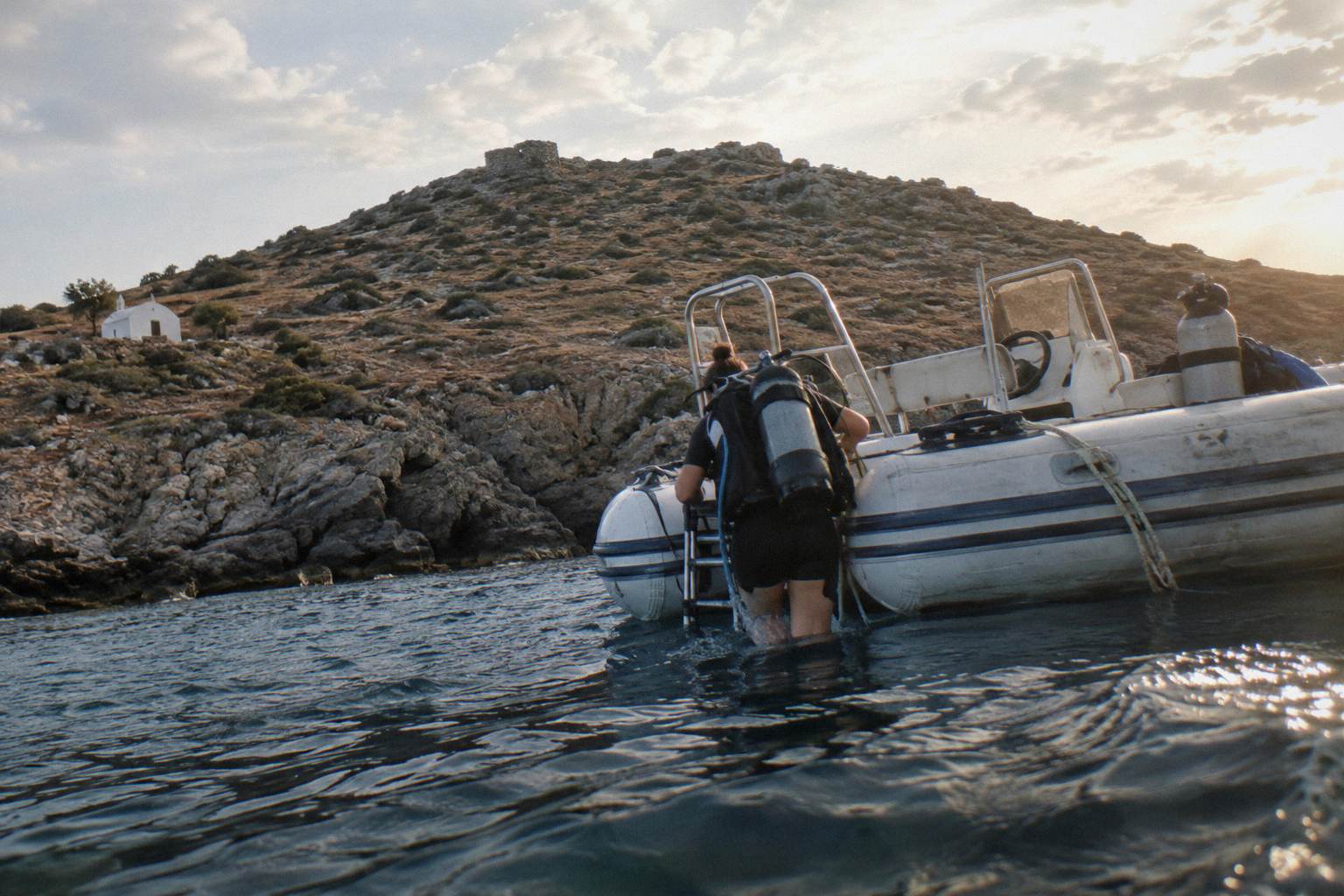
The fourth is forgetting to ask the operator. No trip entry around the island states a no-fly time, and the question belongs on the booking form or in the pre-dive briefing: ask the operator when you book. The instructors will know the day's plan, the dive count and the timing, and they answer this question constantly.
A Day-By-Day Way To Place The Dives
Place one single dive on the last full day and the flight after midday the following day, and the 12 hour minimum clears with margin. Place any two-dive day, or any second day of diving, at least a full day before departure and the 18 hour minimum clears the same way. The pattern to avoid is simple: no scuba on departure day itself unless the dive ends very early and the flight leaves very late.
Here is the same logic compressed into a planning table, covering the schedule shapes that recur on a one-week holiday with one flight out.
| Schedule Shape | Dives Involved | Interval That Applies | Fits Before A Flight? |
|---|---|---|---|
| Try dive the morning of the last full day, evening flight next day | one single dive | 12 hour minimum | Yes, comfortable margin |
| Try dive the afternoon before a morning flight | one single dive | 12 hour minimum | Tight, check times on paper |
| Two-dive certified trip two days before departure | two dives in a day | 18 hour minimum | Yes |
| Diving on consecutive days, flight next day | multiple days of diving | 18 hour minimum | Yes if the last dive is early on the penultimate day |
| Two-dive trip the day before a morning flight | two dives in a day | 18 hour minimum | Tight to risky, move it earlier |
| Snorkel trip on departure day | none, surface swimming | none for scuba | Yes |
The row that deserves emphasis is the last-but-one: a two-dive day ending in the afternoon, followed by a morning flight, clears 18 hours only barely, and a delay in the second dive's start pushes it under. Moving that day one slot earlier costs nothing and buys a night of margin. For Crete Scuba Diving readers pairing a dive with a tight departure, the single-dive try trips are the flexible tools precisely because their bracket is the shorter one.
Common Questions About Flying After Diving On Crete
How Long Should You Wait To Fly After Scuba Diving On Crete?
For a single no-decompression dive, DAN recommends a minimum preflight surface interval of 12 hours. For multiple dives in a day or multiple days of diving, the minimum is 18 hours. After decompression dives, DAN says little evidence exists and a substantially longer interval than 18 hours appears prudent. No trip on the island states its own no-fly time: ask the operator when you book.
Can I Fly The Same Day As A Try Dive?
A single no-decompression dive carries a 12 hour minimum preflight interval, so a same-day flight only works if the dive ends in the morning and the departure is in the late evening, and even then the margin is thin. Try dives on Crete are single dives, so they sit in this 12 hour bracket rather than the 18 hour one.
Do Two Shallow Dives Need The Longer Wait?
Yes. DAN's 18 hour minimum applies to multiple dives in a day regardless of depth, because the repetition is what raises the interval. The two-dive certified trips around the island, and the Salty Descents two shore dive trip at up to 12 m, all fall under the 18 hour bracket.
Does Snorkelling Before A Flight Count?
No. DAN's preflight intervals are guidance for scuba diving, where pressurized breathing creates a nitrogen load. Snorkelling is surface swimming, so the island's snorkel trips, including the guided boat trip from Chania and the sunken city trip at Elounda, do not carry these intervals.
Where Do The 12 And 18 Hour Figures Come From?
DAN, the Divers Alert Network. Its flying-after-diving guidance gives a 12 hour minimum after a single no-decompression dive and an 18 hour minimum after multiple dives in a day or multiple days of diving. DAN also notes an earlier consensus of 12, 24 and 48 hour figures, with its own research trials informing the current guidance.
Does The Dive Operator Tell Me When I Can Fly?
No trip entry around Crete states a no-fly time, and the guidance above is DAN's rather than an operator rule. Ask the operator when you book: they know the day's dive count and timing, and the interval decision still rests with you and DAN's published minimums.
If the schedule has room for one dive, the single-dive trips below fit it best; if it has room for a two-dive day, the certified options carry the longer interval and an earlier slot in the week.